Tuesday, March 06, 2007

Battlestar Galactica - Maelstrom


MASSIVE SPOILERS for episode 17 of Battlestar Galactica’s third season, “Maelstrom”. Seriously, the pivotal two-word spoiler lies beyond this cut, and it's going to cause an uproar.

Okay, so not as game-changing as I made out to be. But now that I re-read the scuttlebutt from Ron Moore and David Eick, they suggest that “Maelstrom” only kicks off the changes of the final three episodes. Oops… Oh Don Piano, indeed. Still, there’s a fairly big character change.

Starbuck’s death is an odd one. The entire episode is devoted to her fragile state, as she begins to hallucinate a Cylon raider, dreams of Leoben and the ancient symbol from the Eye of Jupiter temple that she has painted since childhood, and flashes back in the final act to her abusive and tormented mother. There’s no discernible plot to speak of, and for all of Leoben’s talk since season one of her destiny, we still get virtually no clue as to what it is. Given Starbuck’s indisputable physical death (her Viper implodes), these mythology questions appear to have been raised and left unanswered once again. I foresee two possibilities.

First, Katee Sackhoff wanted to leave and this scuppered the writers’ plans for her arc. Not wanting to ignore the groundwork they have laid, they tie it into her demise in a fashion that implies an apotheosis of some kind.

However, Moore and Eick insist that her death (although not revealed at the time of the interview, of course) precipitates a drastic change in direction for the show. As central as Starbuck is to the ensemble, Sackhoff’s departure would not necessitate a course correction for the mythology, unlike say, James Callis’s Baltar. Which brings me to the second possibility: that Starbuck’s destiny has not yet been achieved, and that she will be back, looking like Sackhoff or otherwise.

Here’s my theory, which just came to me and I want to preserve here for prosperity. Unlike many other engaged TV viewers, I very rarely speculate about a show’s direction or the answers to its mysteries, either because I like to be swept along and surprised or because I have no creativity – one of the two. But I have something this time:

I don’t think that Starbuck is a Cylon. I think that this far into the show’s run, revealing any cast member as being one is going to be difficult to swallow, but Starbuck seems like a particularly big leap. But I do wonder whether she is somehow going to be reborn via the Cylons, perhaps as a Cylon-human hybrid ala Hera, and that her destiny is to bridge the gap between the two races (although where that would leave Hera, allegedly central to Galactica’s core questions, is unknown). How this eventuality can have its roots in Kara’s childhood - her mother’s insistence that she is ‘special’ and her painting the eye-like symbol - is an open question, but it’s not inconceivable that something done to her on the Caprican ‘farm’ or during her abduction on New Caprica has prepared her for downloading. After all, the Leoben we see guiding her through her flashback in this episode said that he would show her the majesty between life and death, or words to that effect.

I dunno, we’ll see. But Starbuck, Cylon-human hybrid… watch this space.

Nicely acted and written episode though, with Sackhoff going out (if she is) on a high with some meaty if well-worn material about her dominating, massively insecure mother. There was a very poignant scene between Starbuck and Apollo that almost made up for the quadrangle tripe earlier this season, and Adama’s final grief-stricken gesture is powerful, one of the only moments that we’ve seen this stalwart character enraged. Plus, Callum Keith Rennie shines as Leoben once again. This guy can deliver lines like nobody’s business, giving every sentence a creepy grandeur. He’s been a great recurring fixture since the series began, and I hope we saw more of him as this storyline continues, whatever it turns out to be.

If this is the end for Starbuck though, plenty will be pissed off, especially since the headstrong Kara Thrace essentially commits suicide. Even the immensely minor Kat, with her inexplicable special episode earlier this season, had a heroic death. I’m of two minds though. On one hand, I’ve never had the immense adoration for the character that so many have. I’ve respected the creation of a strong female character that eschewed the butt-kicking conventions that have become cliché in recent years, and Sackhoff has been a consistently great performer. But she seems to have existed on the periphery of the show’s central myths and meanings and consequently I won’t miss her as much as I would other characters (Roslin, Baltar, Adama). On the other hand, I’m a little unsure about what Galactica will be without her. Will her absence be more keenly felt than I suspect in terms of the show’s essential makeup? We’ll have to find out. Or perhaps we won’t…

Monday, March 05, 2007

Letters from Iwo Jima

The grand irony of Clint Eastwood’s commendable project to portray the Battle of Iwo Jima from both the American and Japanese perspective is that Letters from Iwo Jima - the lower-budgeted, less commercially viable, and later conceived film - is significantly better than the ‘primary’ picture, Flags of our Fathers. The requisite lack of spectacle (due to a $15 million budget compared to Flags $60 million) has resulted in a more subtle and intelligent film. Everything about Letters from Iwo Jima, from structure to acting, is low-key in comparison, and the payoff is vast.

Sensibly, Letters is not merely Flags retold with a Japanese cast. Eastwood has decided against such a clinical mirror-image, so the central trio of Flags is nowhere to be found, the cumbersome time-jumping narrative is largely avoided, and the most statuesque character – Ken Watanabe’s General Kurybiashi – has no prominent counterpart in Flags. Although this helps to establish Letters as a film in its own right, the changes are actually repairs of Flags’s flaws. That film incorporated a recurring framing device, plus the soldiers at home, plus their memories of the battle, all self-destructively intermingled. Letters’s narrative is comparatively linear, merely top-and-tailed by Japanese historians excavating on the island and occasionally flashes back to the character’s pre-war lives in some very effective self-contained vignettes. The battle itself is the dominant story, enabling us to deepen our attachment to these characters so that the despairing climax is poignant and engrossing.

The two central characters are Watanabe’s practical general, who prohibits the suicide his officers often rapidly seek and thus incurs their disdain, and Kazunari Ninomiya’s young baker Saigo, drafted into service and angry about the price of protecting sacred soil. Although one could question the bias involved in having the two principals scorning embedded Japanese attitudes, their decisions at the climax and our response to their actions reveal something more complex. Watanabe is characteristically excellent, but Ninomiya is quite a find as Saigo. In him we have the endearing and accessible protagonist that Flags lacked, trapped by Ryan Phillippe’s lack of emoting and Adam Beach’s over-emoting. There are a number of additional interesting characters, including Shimizu (Ryo Kase), a disgraced military policeman, and compassionate Olympic athlete turned officer Nishi (Tsuyoshi Ihara). Nishi features in a key scene that sums up the entire project’s goals, when he captures an American soldier and orders him to be treated so that his men can finally meet the enemy. Upon the young man’s death, he reads them a letter from his mother, and the men contemplate that their foes hold dear the same values that they do.

Subplots like this can make the narrative a little episodic and prone to fits and starts, but there are so many powerful scenes that build to a resonant climax that it’s easily forgiven. Not to pick on Flags, but it so rarely offered such moments, except when Phillippe’s character finds a captured friend, now dead. We never see the possibly mutilated deceased, only Phillippe’s shadowed face. In Letters too, Eastwood doesn’t shy away from violence, implied or otherwise, particularly in one of the most harrowing scenes of the year, when a group of soldiers commit suicide with hand grenades one after another, after another, after another as the camera pans across them. While far less is shown than it could have been, the idea and glimpses converge for the raw truth about the Japanese conception of a noble death.

Despite such blunt force, there are moments of quiet beauty too. The eponymous letters are often spoken over happy moments back home, and the gentle joy actually reminded me of the films of Hayao Miyazaki (although such a kneejerk comparison may mean I need to see more Japanese cinema). Regardless, Eastwood has admirably captured a Japanese ethos in this film, particularly with the score, which immerses us in some gorgeous moments. He also doesn’t flinch from casting the American soldiers in a poor light, just as our glimpses of the Japanese in Flags are similarly horrific. In a desperate battle, the brutal is what will likely be seen in your enemy. Eastwood seeks to make this sad fact clear and to demonstrate that it is this unavoidable obstruction that causes warring cultures to descend further into oblivious conflict. For a right-winger, Eastwood has made a remarkably compassionate film here. It’s more than likely that of the two, Letters will be the one remembered, because Eastwood’s ultimate goal with the Iwo Jima endeavour can be found here alone if need be.

Battlestar Galactica Diary


After a month overseas, I’ve been playing catch-up with Battlestar Galactica, especially since the much-touted, game-changing episode “Maelstrom” is airing this Sunday, kicking off a five episode arc to conclude the season. So here’s some thoughts on the four episodes I’ve missed, and they’ll be followed soon by a Lost catch-up after my viewing buddy comes over tonight.

SPOILERS for season 3, episodes 13-16: Taking A Break From All Your Worries, The Woman King, A Day in the Life, and Dirty Hands.

Taking A Break From All Your Worries

It’s been a wildly uneven season for Galactica thus far, and this episode encapsulated everything that’s still great about the show and everything that’s wrong. The Baltar interrogation storyline was vintage Galactica, intense and provocative. However, I cannot convey how tedious I find this Starbuck/Apollo soap opera. I’m all for relationship sagas, but their story has so little depth and nuance that it jars horribly with the show’s more subtle characterisations. If the consummation of their long dance around each other had been restricted to the flashback episode earlier this season, it would have packed a punch. That was a strong episode that took them to a place the show had been itching to visit yet explained how it couldn’t continue, yet I was crestfallen to see the two pashing in secret two episodes later. Their spouses, Dualla and Anders, could make the quadrangle more interesting, but alas, their reasons for tolerating the unspoken betrayals have never been satisfactorily elucidated. Galactica has almost always managed to weave relationships seamlessly into its broader mythology and thematic tapestry, but this one has stuck out like a sore thumb. Perhaps later events will redeem all the attention it’s received, but I suspect that this was still a case where less would be more.

Thankfully, James Callis and Baltar more than compensate, as he is interrogated for information about the Cylons’ plans. But we know he knows nothing, so the drug-induced delusion he is eventually put under yields further probing of Baltar’s self-preserving, victimised psyche rather than vital intelligence, except this time, Adama and Roslin finally learn what Baltar has been experiencing from the start of the show. Whether they give a crap isn’t really clarified.

Edward James Olmos directs these scenes with a great eye, employing water tanks, extreme close-ups, and various other claustrophobic techniques to help us empathise with Baltar’s paranoia. James Callis deserves massive kudos for his performance this season, and this episode is the highlight. If anyone in the cast deserves an Emmy (as criminally unlikely as the academy rewarding this show is), it’s Callis. Baltar’s furious conviction in his own lack of culpability is breathtaking to behold.

However, what the hell were Adama and the bloody President doing interrogating Baltar personally?! This was so wildly implausible that it initially took me out of the episode. While it’s very satisfying to see McDonnell and Olmos confronting Callis after so much build-up, it should have been reserved for one-on-ones rather than shoehorning them into intelligence gathering. And sadly, the two leaders seem to hold back their emotions when it comes to Baltar, maintaining control throughout. This may be deliberate in order to convey their utter disdain for him, but it’s not very satisfying, as Baltar’s crimes should be eliciting more from Adama than clinical strategising. Conversely, Gaeta’s reaction is extreme and out-of-character. The Galactica crew consistently take the law into their own hands, and for once it would have been nice if words had carried the drama throughout.

But still, it’s an episode with great moments that lays some groundwork for the immediate future.

The Woman King

Oh lordy. A lot of people shit on season 2’s “Black Market”, but this officially marks the worst episode of the series to date, which is a shame since it showcases the underused Helo (Tahmoh Penikett). Despite the intricate world of the fleet that the show has constructed, Galactica is finding it very difficult these days to tell stand-alone stories. The core episodes, such as the New Caprica arc that opened the season, have raised such a high bar and are so resolutely non-formulaic that problem-of-the-week episodes should be beyond these writers. Because Galactica has always been such an organically plotted series, the need to introduce hitherto unseen guest characters and fleet problems is almost unavoidably awkward.

In "The Woman King", Bruce Davison plays a civilian doctor that we’ve never heard of before and the Sagittaron colony is established out of nowhere as so religiously fundamentalist that they reject all medical treatment. As Helo tries to manage the refugees now staying aboard Galactica, the story becomes a killer doctor tale where Davison is revealed as a racist murderer seeking to eliminate the pesky Sagittarons and free up the medicine. Yes, in a season with the carefully judged, plot-device free New Caprica stories, it’s come to this.

The episode is trying to make a point about whether inconvenient traditions should be respected in desperate times, but the Saggitarons are so implausibly backward and the doctor’s solution so extreme that any wit the discussion may have had is thrown out of the window. Plus, the resolution is far too stilted, with Helo vindicated purely because Doc Cottle was tired before and didn’t bother to do as he asked. The disbelieving characters then support Helo far too openly and readily – even the stubborn Tigh, who, of course, naturally considers the guest star of the week an old friend, thus Helo had even more to fight through…

It may he ham-fisted, but it’s not all bad. We get some long overdue insight into Helo, and Penikett clearly relishes the opportunity. Things get a little meta when Helo suggests that people see him solely as the Cylon’s husband, which is indeed what he’s been lately. This episode goes a little way to pushing past that, especially as we see he and Sharon fight for the first time since getting together, adding a nice dose of realism to their quite idyllic bond. Hopefully he continues to get something to do.

A Day in the Life

This one screams ‘missed opportunity’. Adama recalling his failed marriage could have been a superb character piece and a tour-de-force for Olmos, but it never comes close. Adama’s issues and anxieties are just laid out for us by his wife in a series of pseudo-flashbacks where she essentially voices what he cannot. We’re not able to infer anything, particularly because Olmos chooses to play this so low-key, partly because he’s preoccupied with the B-story.

Due to a cock-up sparked by Galactica’s rough shape since the battle above New Caprica, Cally and Chief Tyrol are trapped in a sealed room with a tiny hull breach, and the crew must rescue them by venting them into space and catching them with a raptor. Like all the couples on the show, these guys have been having problems, with the Chief reverting to his unmarried, pre-New Caprica self too much for Cally’s liking; she feels that she and their baby are being neglected. Cue a tie-in to Adama’s own regrets about not being there for his kids, the Chief realising what he’s been missing due to near-death experience, blah blah. Galactica seems to have lost so much of the subtlety that was its hallmark, at least temporarily. Even the dialogue seems weak these days – what’s going on?

It does conclude with a great scene between Olmos and McDonnell where they very gently imply their attraction and perhaps even love for each other, but that their responsibilities prohibit them from acting on it, despite the evening they spent together on New Caprica. Although we saw nothing happen besides an intimate conversation, it now occurs to me that this episode too doesn’t rule out the possibility that perhaps they did embrace the change that the new planet offered. Hmmm…. Anyway, it’s a great little scene and a long-awaited one. These two actors are class acts and they deserve Emmys, blah blah, not gonna happen etc etc.

Well, I have one more stand-alone before “Maelstrom”, and perhaps that headlong plunge into the core story again (if I interpret the buzz correctly) will restore the show to fighting fitness again. Looking at these episodes though, I must say that the shorter, 13-episode order for next season is looking very promising. As great as seasons two and part of three have been, they never matched the taut efficiency of the first.

Dirty Hands

Now this is more like it. Only two episodes after its worst stand-alone episode yet, Galactica delivers one of its best. Eschewing plot devices and stock storylines for a terrific political exploration of the practical ramifications of the ‘rag-tag fleet’, “Dirty Hands” is smart and thought-provoking. What a relief.

The refinery ship that produces the fleet’s fuel has demanded better working conditions, so Chief Tyrol is sent to try and assess the problem. Some workers are being spurred to action by chapters of a book that Baltar is writing from prison, smuggled out and proclaiming the class disparity in the fleet, calling for action. Once he understands the infringements that are taking place, the Chief instigates a fleet-wide workers’ strike.

Like “The Woman King”, “Dirty Hands” asks what measures should be taken in wartime to ensure stability and survival, one of Galactica’s frequent preoccupations and a natural outgrowth of its apocalyptic premise. But instead of a corny killer doctor and a wholly disbelieving majority, more realistic plotting and motivations can be found. Plus, it’s gloriously textured. One tremendous scene features Tyrol asking the imprisoned Baltar what he hopes to achieve, and while his conviction in his newfound revolutionary beliefs is still in question, his arguments about the divisions within the fleet are canny and unnerving, as if we as viewers have been putting up with the subjugation by happily following the exploits of Our Heroes. And Baltar and Roslin face off again as she orders him searched for pages from his book. In a season where certain characters have been sidelined or saddled with poor storylines, Callis has emerged as the crown jewel of the show. Sure, he has the meatiest material on the page, but he’s delivering it amazingly.

The downside to “Dirty Hands” is that in the script’s quest for moral relativism, Adama and Roslin are portrayed as far more extreme than we have come to expect. Although this can be justified by the central problem of the story – the desperate need for a functioning fleet – watching Roslin coldly reject the Chief’s concerns and, worst of all, Adama threatening to shoot Cally for mutiny if the strike is not averted, doesn’t ring true, even in their trying times. Sure, it all comes good at the end, but the balance is sadly not maintained, perhaps due to a desire for a tense climax.

Nonetheless, this is the kind of insight and timely subject matter that Galactica has drawn praise for yet has been largely absent since New Caprica. I’m now much more confident as we head into the final stretch. Bring on “Maelstrom”…

Sunday, March 04, 2007

Friday Night Lights - Pilot

It’s a show about high school American football in small-town Texas. I cannot stand sport. And yet Friday Night Lights is indisputably one of the best shows on television.

I’ve just watched the pilot episode and am seriously impressed at the understatement and discernment on display. I’ve heard a lot about this low-rating but highly acclaimed show since its premiere last October. It’s the small-screen incarnation of the eponymous book that spawned the 2004 film with Billy Bob Thornton, and has been receiving raves for its critique of the role of sport in American culture and for intelligently addressing any number of social and family issues with a probing insight rare for network television.

The pilot can be a little dry and clearly needs some time to settle in and start packing an emotional punch, but its unassuming characterisation, natural dialogue, and dedication to realism mark this as an important show. In a TV drama landscape dominated by police procedurals, any show that breaks that mould and doesn’t feed us formulaic plotting and painfully obvious lines is one to keep an eye on. Plus, even though it’s about football, this is a show that anyone can draw something from. Speaking as someone utterly apathetic about playing or watching sport and who is openly critical of its prominence in Western society and our reverence of it, hopefully this generalising pronouncement actually means something.

The opening sequence immediately marks Friday Night Lights as a subtle and provocative enterprise. We are not expected to be adulatory of sport overall, let alone the high school leagues that provoke an astonishing passion in local communities. The quarterback is a hero, but we are meant to see this via the town’s unconditional respect for him, not because of a stereotype that we must subscribe to. Citizens on local radio and in person harangue the new coach (Kyle Chandler, showing great and promising restraint in the lead) with political intensity, believing him to be incapable of leading their beloved team to victory. And a dichotomy is already apparent between the socially accepted sports stars and those who question their Olympian status, such as, interestingly, the coach’s daughter (Aimee Teegarden). Yet the players themselves are divided too and exhibit nuance and complexity from the start; we sense that they may be tormented or altered by the expectations thrust upon them. We watch well-mannered and apparently decent star quarterback Jason Street (Scott Porter) being accosted by the mayor, who insists that he play meanly and viciously. The scene upends our preconceptions when the nice female mayor's praise of his affable qualities gives way to blunt criticism that these are weaknesses on the field that could cost them success. Dillon is evidently a town that finds its self-esteem in its renowned team, and the series will undoubtedly delve deeper into this destructive and fascinating community crisis of identity and purpose.

Friday Night Lights has been blessed with massive praise, with TV Guide’s reliable Matt Roush even comparing it to The Wire in its analysis of how a community functions (or doesn’t). While it’s too early for me to make such a call – and it would be a miracle if the confines of network television could ever yield a gem like that – Friday Night Lights’s texture and grace, of a kind rarely seen outside HBO, point to great things to come. Thankfully, the prestige that the show has brought NBC has secured FNL a full season, and a second has not been ruled out by commentators. Sure, I've only seen one episode, and Studio 60 managed to plummet from a stellar pilot into a miasma of failed potential, but the continuing applause for FNL 18 episodes in gives me hope. I can’t wait to see what it digs into.

Tuesday, February 27, 2007

The Star Trek XI Rumours

The rumour mill for the casting of the next Star Trek film, a prequel set during Kirk and Spock's early years, has been raging for months with the seemingly implausible notion of Matt Damon playing Kirk. Even though the franchise has finally been removed from Rick Berman's hands and placed in those of Lost creators JJ Abrams (who last week was finally confirmed as directing, not just producing the film) and Damon Lindelof, I found the prospect of a major star like Damon signing on for an iconic character in a moribund franchise to be highly unlikely.

Yet no-one else seemed to think so. Leaving aside the wisdom of resurrecting Star Trek so soon - will the general public respond? - and of recasting Kirk and Spock, to me it was unequivocally daft to consider that such names would ever be attached to Trek, which as much I love it was dragged on interminably since the end of Deep Space Nine. Even in its heyday, big-name stars were elusive (the closest they got was Tom Hanks as Zefram Cochrane in First Contact beforehe had to pull out).

After that brief flight above the clouds in the mid 90s to frolic with the mainstream (making the cover of Time, TNG getting an Emmy nom for Best Drama, FC hitting big), Trek then plummeted like Icarus as far as the public were concerned, back to that nerdy shit that they always scorned. As much as any star loves Trek, I don't see them actually spending a year of their lives filming and promoting it. It'd have to be one hell of a compelling take on the material.

Yet IGN, who have proven and well-placed sources in the industry, have published an article stating that talks with Damon are in an advanced stage. Not only that, but Oscar winner Adrien Brody is in talks for Spock, and Gary Sinise for Dr. McCoy!! The rising James McAvoy is rumoured for Scotty, and he isn't denying it in interviews. Granted, Sinise is in TV spin-off limbo with CSI: New York at the moment, but that's still an incredible lineup for a project like this. Sinise in particular is perfect for his character, as much as anyone can be. Say what you will about the cast's acting abilities, particularly Shatner's, but these guys played iconic figures for 30 years, and no-one else has yet succeeded them, as it would be just audacious to do so.

I'm still highly skeptical that deals of this calibre could be pulled off, and of the demented plan to return to Kirk and Spock's early years (the Enterprise will apparently be under the command of original pilot episode captain Christopher Pike), but I'll be open-minded with Abrams and Lindelof in the mix.

Thursday, February 22, 2007

Links of choice

- TV Guide's Michael Ausiello interviews Battlestar Galactica executive producer David Eick about the direction of season three and the recently announced season four (saints be praised!! I just hope that the episodes I have to catch up on after being away bring the show back on to firmer territory than the last few outings). Fear not, there are no spoilers. It seems that the changes coming, starting with the March 4 episode, are so momentous that Moore and Eick are being very careful with what they say.

- James Cameron speaks to Harry Knowles again about the nature of Avatar, and confirms that Sigourney Weaver has a major role.

- the third trailer for The Simpsons Movie is out, and it actually contains a couple of funny gags, which is a nice surprise. I still have next to no faith in this film given the abysmal last 7 or whatever seasons, as I complain ad nauseum to those around me. But the presence of original and long-since departed writers George Meyer and John Swartzwelder bodes well. We shall see.

The Fountain

The Fountain arrived with a whimper in American cinemas in November and Australian ones last month, but the faithful have been singing its praises. Sadly, most critics have rejected the film while apparently failing to even pay attention to it. Darren Aronofsky’s long-gestating follow-up to Pi and Requiem for a Dream is one of the most idiosyncratic films of the last few years but never fails to be one of the warmest and kindest in recent memory.

After a more expensive version with Brad Pitt and Cate Blanchett capsized when Pitt pulled out, Aronofsky pared down the screenplay’s set pieces and preserved its structure and intent. The reduced budget got him a second greenlight with Hugh Jackman and Rachel Weisz, but its debut at Venice last year was so divisive it actually provoked a fistfight! Even now it sits at a perfectly even 50% at Rotten Tomatoes. But blah blah, insert spiel here about great films not being appreciated at the time, Citizen Kane, etc. It’s very likely true though. The Fountain feels so little like anything else that it’s a true original, or perhaps even genuinely ahead of its time. Richard Schickel describes Aronofsky superbly as “one of the few American filmmakers who saw the cinema past as a jumping-off point, not a toy store to plunder.”

Tommy (Jackman) is a cancer researcher now dedicated to finding a cure in order to save his dying wife Izzi, who is writing a book about a conquistador in Maya in 1500. We follow that story through interludes with Jackman as noble Tomas and Weisz as Isabel, Queen of Spain, who sends her conquistador on a mission to retrieve the sap of the Tree of Life, which she hears is hidden in a Mayan city. These two strands alternate that of a bald Jackman floating through space in a bubble with the Tree itself, heading towards a vast nebula. The publicity says that this is set in the twenty-sixth century, although the film never states that. But Tommy and Izzi are the principal focus, as Tommy becomes so determined that he misses out on his remaining time with his finally content wife.

Much has been made of the film being morose, and it’s certainly sombre, but gently and calmly so. It’s ultimately about two people and how they contend with love and death, and the film’s science fiction leanings are far less apparent than I expected, given that the futuristic sequences may not even be real. Regardless, although I’m a genre lover, it’s not the SF material or ethos that is entrancing about this film, despite the breathtaking beauty of the space sequences. Aronofsky takes scenes that are largely between two characters and transforms them into a platform for contemplating primal issues in all their vast wonder, all without losing their intimacy. A close-up on Jackman’s lips whispering reassuringly in Weisz’s ear feels like the most delicate thing ever filmed.

Granted, these characters are not as multifaceted as they could be, especially since they have the film virtually to themselves (Burstyn has oddly taken a purely functional role here that has no depth). Tommy’s drive in the face of despair and Izzi’s kindness and wonder are a little one-note, but they don’t detract for two reasons. Firstly, the performances contain enough nuance – particularly when the three Jackman personas are taken together – that they make these people more than real enough. The hunger with which a frightened Izzi kisses her husband and Tommy’s sobs as he crudely tattoos a ring on his finger add a layer of painful reality that takes these characters beyond stock territory. Secondly, the simplicity ties together with the broadness of the film’s themes. To teeter into the intricacies of a relationship drama would miss the grander boat Aronofsky is sailing us on. That’s not to denigrate the insights that such dramas can offer us, rather that films with larger and paradoxically simpler goals require a clearer playing field, which is why there is so little dialogue in the film. Despite the occasional clunky line, Aronofsky maintains that field, and the result is spectacular.

Jackman and Weisz’s performances must be acknowledged, with Jackman turning in by far his best work. It could be said that he just hasn’t had a chance to stretch like this yet, but his work is worthy of an Oscar in itself. It’s a naked performance of despair and awe. Weisz doesn’t have as much to work with as Izzi, but she convinces us of Tommy’s deep love for her without placing her on a pedestal. They have a tremendous chemistry together, which is a relief as they must anchor the film more than any two leads of recent memory.

They are supported by astounding visual beauty. Libatique’s cinematography, from the snowy panoramas to the starlit darkness of the bubble scenes, is breathtaking, as are the chemical reactions filmed to produce the nebula effects. Aronofsky eschews CGI and literally films a natural process, and it’s stunning. Clint Mansell, in his third collaboration with Aronofsky, delivers a score that ranges from the melancholy to the awe-inspiring while remaining wholly consistent. Some scenes are truly made by the music, tipped over from excellence to greatness. It’s an incredible musical achievement.

Forgive a tangent, but it’s been brought to my attention recently that I like inscrutable films, and I was struck by the statement’s accuracy. However, I’d clarify and say that I adore inscrutable films that I can still sense a logic and cohesion behind, films that are a puzzle of consciousness that have a solution, but possibly more than one. Such films somehow lay bare a fundamental truth without coming close to stating it, like the beauty of a landscape that we don’t need to spell out for ourselves, and when we do the superlatives seem weak. Certain films form this connection for us, and it’s a blissful feeling. Once you’ve finished vomiting, I hope you return to read the rest of this.

Some would contend that appreciating the unfathomable in films merely makes someone a sucker for disjointed weirdness that pretends to have a point but was never meant to, someone who will glean meaning from technical experimentation. Maybe so. Maybe I’m a fool for seeing grandeur in The Fountain or Mulholland Drive or The New World. But if that’s the price for such a great reward, so be it.

And after two viewings, The Fountain still stands as a grand vista of knotted confusion. While the credits rolled, I basked without any concerns, but later the questions shuffled in. If the future sequences are real, how did Jackman’s character get the Tree of Life in a bubble, let alone survive that long? At the climax (no spoilers here), how do certain things appear and certain people suddenly become others, literally and otherwise? Does it even matter? And what is Aronofsky ultimately trying to say, if he has specific statements at all as opposed to setting up an arena for discussion? The Fountain incorporates a lot of religious imagery, from Christian to Zen, and that’s only part of the puzzle. I can understand Devin Faraci’s instinctive desire to write a book about this film, although I wouldn’t know where to begin. And Aronofsky conjures all this up in a mere 96 minutes that never feel rushed. I won’t assume as many have that The Fountain will eventually be regarded as a classic – perhaps not enough people will ever see it – but it deserves to be.

Wednesday, February 21, 2007

The Queen

Many reviewers of The Queen have left their personal politics about monarchism out of their pieces, and so each published viewpoint is suspiciously coloured by the possibility that they harbour some royal love and are happy to see cinema vindicate them at last, given that Stephen Frears and writer Peter Morgan’s The Queen is largely sympathetic to Elizabeth II while critiquing her response to Princess Diana’s death. However, I will not be so restrained. I loathe monarchism and find the British people’s reverence for the royal family unnerving and difficult to fathom. That Americans and other outsiders looking in are fascinated by them as well is even more heinous.

I state this because this will be a strangely middling review. I found The Queen a serviceable film that remains admirably close to impartiality, but am bemused as to why this film exists at all. Of all the major political stories of the last decade, why should this one be dignified with a classy cinematic examination? Even a rational, self-aware monarchist (if such a person exists) must admit that this turbulent decade has been home to far more social upheaval than Diana’s death, War on Terror or otherwise. This was one of my major grievances with The Queen, a film so embedded in real-world context that it becomes difficult to judge solely on its technical merits… hence the political clarification. I could not shake the question of relevance, and since I struggle to find any, The Queen’s rapturous reception and myriad awards is frustrating and mystifying, especially since it is functionally rather than audaciously crafted.

Beginning with Tony Blair (Michael Sheen) meeting Queen Elizabeth (Helen Mirren) following his landslide 1997 election victory, The Queen soon jumps forward a little to chronicle the week following Diana’s fatal car accident in Paris, when Britain mourned and then raged at the House of Windsor’s lack of public response. This is a behind-the-curtain movie, as we watch Blair and wife Cherie debating the merits of the monarchy, Blair trying to negotiate with Elizabeth to appease the public mood, and the queen’s pondering of the problem during her customary holiday at Balmoral, an isolation that only compounds the problem. All sides on the issue are presented by different characters, with Prince Philip (James Cromwell) and the Queen Mother (Sylvia Syms) insisting that no response is perfectly appropriate – why is the public so moved anyway, they ask – and Prince Charles (Alex Jennings) advocating an engagement with the public, believing that times have greatly changed since his mother’s heyday and that an outpouring of public grief should be dignified rather than shunned. Meanwhile, Blair goes from gentle mockery of the monarchy to becoming bewitched by the queen’s stature and dedication.

Frears and Morgan certainly aren’t indulging in a royal lovefest. They have indicated their disdain for the institution, yet decided to make the film anyway. This orientation is readily apparent in the final product, and makes The Queen a great deal easier to swallow and vastly more intelligent than it could have been. Morgan researched and interviewed key players exhaustively to approximate the behind-the-scenes dealings as closely as possible, giving these scenes the densely packed enjoyment of The West Wing without the idealism. But the climactic symbol of the stag is overwrought, offering an unrealistic and unnecessary catalyst for the queen’s ultimate decision. This incident may well have taken place though, so I suppose I shouldn’t quibble, but the sequence does veer The Queen from restraint into the maudlin.

The performances are one aspect that have been rightly praised. Mirren is uncanny as Elizabeth II, impersonating but humanising her without straying from the demeanour we know so well. Her performance is clearly the result of a lot of hard work and deserves to be rewarded. Sheen is also impressive, although seeing an actor portray the very distinctive and still prominent PM is initially unnerving. But Sheen allows us to see past the tics into the keen mind that achieved the impossible. Sadly, the Blair side of things has a similarly clumsy climax as he rages at his staff for failing to sympathise with the queen’s lifelong duty-bound existence. Again, this may have happened, but it sniffs of a cinematic catharsis where a subtle hand would have been more effective.

I’m currently overseas (hence the long gap between updates) and it occurs to me now that The Queen is a perfect airplane movie. It’s a well-made drama that passes the time and still works on those tiny little screens. But this doesn’t warrant the unmitigated adoration, especially the Oscar fuzz. Once again, the entrenched critical establishment have hailed a strong but comfortable film and ignored dazzling innovation. The lack of attention for Children of Men and The Fountain, however unlikely they are as Oscar hopefuls in the current climate, makes The Queen’s success especially aggravating. It’s worth a rent, but not a place in history.

Tuesday, January 16, 2007

Kingdom of Heaven Revisited

As promised, here is a repost of my pre-Remote Wanderings reviews of Ridley Scott's Crusades epic Kingdom of Heaven. The first is of the theatrical cut from June 2005, the second of the Director's Cut from June 2006. It's been interesting to look back at these reviews and see how my style has changed (and hopefully) improved in only a year of intermittent work. Consequently, please forgive any clumsiness or repetition. Please click the 'Read More' link below for the full post.

THEATRICAL CUT - JUNE 2005

Ridley Scott is a damn fine director, there’s no two ways about it. Despite his critical and commercial slump between Thelma and Louise in 1990 and Gladiator in 2000, the man’s largely been pumping out interesting, well-made movies, and unlike another major director who’s as comfortable creating small dramas as he is epics—Steven Spielberg—Scott manages to disappear into every film he does. Whether it’s Jurassic Park or Catch Me If You Can, Spielberg’s films generally feel like Spielberg films. It’s not a bad thing, it’s just that you can feel his presence as you watch, whereas Scott is a chameleon: it’s hard to believe that the same guy made Gladiator and Matchstick Men in the space of three years. He alters his directorial style drastically with every movie he makes so that any signature methodology refuses to form, but he’s always a terrific all-rounder despite this; his movies are consistently well-acted, well-shot, and well-written.

So with this in mind, Kingdom of Heaven becomes quite the film to ponder. After the solid Gladiator (not Best Picture-worthy, but an excellent film nonetheless), the prospect of another historical epic from Scott was enticing, especially after the underwhelming Alexander and the almost amateurish Troy. Scott’s record gave an all-too-rare guarantee of at least reasonable quality, and he was tackling fairly fresh material, as the Crusades have never been substantially addressed on film before, certainly not enough to yield a definitive motion picture on the subject. So if Scott could apply the balanced formula of Gladiator to this particular area, then we could be confident in a solid historical epic, right?

It’s tragic to see a director as consistent as Scott, and particularly one who is going through a period of sustained creative excellence, perform so underwhelmingly. Technically, Kingdom of Heaven is superb: the cinematography is gorgeous, the visual effects successful but unobtrusive, the score quite serviceable, and the historical detail rich. Likewise, the acting is nothing to sneer at - Liam Neeson is terrific as always, though he appears far too briefly; Jeremy Irons makes a welcome return to ‘big’ cinema with a typically strong performance; and even Orlando Bloom is perfectly adequate in the lead as Balian. He may not exude the intense charisma of Russell Crowe in Gladiator, but his lack of experience as a leading man is certainly not distracting. While his performance is nothing spectacular, it’s well suited to the film and doesn’t scupper it as many expected it to.

No, the problem with Kingdom of Heaven is whichever studio executive forced Scott to cut around 80 minutes of footage for theatrical release, thus reducing a nearly 4-hour epic to 2 hours 20. Entire subplots were excised. Scott hasn’t spoken too extensively about these cuts, but there are reports that while he was certainly not happy about them, he was relieved that he at least got to perform them himself. Of course, until the full cut is seen, the brutal editing cannot be presumed to be the reason for the film’s failure. However, it makes a great deal of sense, because the film’s main problems are insufficient narrative detail and, most crucially, characterisation. Whereas Gladiator was very efficient in its development of character, Kingdom was clearly adopting a subtler, more leisurely approach, more akin to epics of old like Lawrence of Arabia. There may well have been entire scenes that did not further the plot, but gradually revealed facets of the characters that would make them resonate as their roles in the plot came to prominence. With longer films, particularly those over three hours, the feeling that you’ve been engrossed in this story for a substantial length of time is utilised to facilitate characterisation. This doesn’t mean that directors make their films lengthy so that audiences will relate to the characters due to sheer overexposure - such an approach would naturally fail anyway. Rather, if the pacing is well-constructed (see The Lord of the Rings and Titanic for how well a long film can be paced), then the audience will remain engrossed but still be aware that they have spent a substantial amount of time involved in the story and the characters. This approach allows for a more subtle, accumulative approach to characterisation, and is especially appropriate when the events of the story span years (Gladiator, for example, takes place over a comparatively short length of time). Kingdom does cover a quite substantial time period, and I’m confident that this more gradual (not to be confused with ‘slow’) approach is what Scott was employing, so that the ruthless editing of nearly an hour and a half of footage rendered the approach moot and virtually destroyed the film’s ability to develop character and narrative appropriately.

This compromise is painfully evident throughout the film. Major events happen far too quickly without enough build-up. Relationships are touched upon as having significance even though there have been far too few scenes devoted to them. Supporting characters can be dispatched in a pivotal fashion, but the film leaves us questioning why their death is supposed to matter. There are a huge number of instances of these deficiencies, and combined, they wreak a terrible effect on both the climax and the audience’s overall investment. The climactic siege of Jerusalem is fairly dull in terms of being an affecting experience for the characters, because it happens so quickly in relation to their positions within the film. The leader of the Muslims, Saladin, is painfully underdeveloped, and when he confronts Bloom’s character, the scene oozes significance even though the audience is left struggling to remember when it was ever earned.

As for audience investment, the fact that Bloom’s character largely remains a cypher is what cripples the film. This is not Bloom’s fault, but rather the film’s (or perhaps, the theatrical cut’s) failure to provide enough instances for the audience to get to know him, understand him, and empathise with him. Balian is our window into the immense and expansive conflict of the Crusades, and if we cannot appreciate his motivations on anything but a superficial level, then that conflict will be rendered less interesting. The fact that the supporting characters cannot compensate for this due to their own lack of development only makes matters worse. But again, what’s most telling is that certain key incidents involving these characters carry a significance that must have been earned in other scenes; the focus is too strong, and the resonance they are supposed to exude too apparent in a surface context.

An example is Brendan Gleeson’s character of a political manipulator who assists Marton Csokas’s newly-crowned king in his ambitions for war. When Gleeson exits the film, he has literally appeared for three or four short scenes, with barely any chance to make an impression on the storyline or on audiences. Yet when he does depart, the event is foregrounded in its brutality, and is clearly meant to impact Csokas’s character in that one of his key allies has now been lost. Yet I was sitting there uncertain as to why we were supposed to care. When were we ever given the impression that Gleeson’s character remotely mattered? His final scene implicitly states that he does, yet there has been no opportunity for this to be justified. Again, the scene screams of lost footage, and like many others in the film, fails to make the appropriate impact due to a lack of narrative investment leading up to it. Not only is this the problem with individual scenes, but with the film as a whole.

Within the theatrical cut of Kingdom of Heaven, there is an excellent film screaming to be released from its mediocre confines. No film has demanded an extended cut this powerfully in many years, and although such a version may ultimately reveal that the film’s problems are endemic regardless of length, it’s so hard to believe that such a competent and experienced filmmaker as Scott would film such a poorly developed script. Of course, even the best director can make a dud film, but more often than not, this is due to a failure to live up to its ambition, even with the resources that were available to it. Scott’s ambition for Kingdom of Heaven seems to have been chopped off at the knees, and it’s interesting to note how very few reviews for it are strongly positive or negative - instead, they are courteously ambivalent, perhaps tacitly realising that there is potential in this film that has not been seen.

If what we’ve seen of Kingdom of Heaven was supported by a good hour of character development and narrative enunciation, then the currently available material would surely resonate more strongly. Even before I knew for sure that a substantial amount of footage had been cut, I reflected on the film (even as the credits rolled) and felt that great swathes of the film must be missing - I, and those I saw it with, had the common sentiment that “that can’t be all there was”. In themselves, the theatrical cut’s scenes are solid - they just lack the context to be successful as part of a whole. There are rumblings that Scott’s full cut will be released on DVD next year, and I’d wager that a profoundly different, and much, much better film will reveal itself in that form. If it is so radically different, and subsequently makes the broader impact that such a version should, Kingdom of Heaven could stand as possessing the most important alternate cut of a film in many years, perhaps since Scott’s own Blade Runner in 1992. There could be a classic in there somewhere... just don’t bother seeing the film as it’s available now. The real version awaits, and so the theatrical one only merits attention now on the off-chance that the extended cut ends up being a revelatory experience - let’s hope.

DIRECTOR'S CUT - JUNE 2006


A recent triumph for cinema fans is the DVD liberation of Ridley Scott’s director’s cut of Kingdom of Heaven after its butchering at the cinema in May of last year, wherein Fox ordered Scott to remove 40 minutes of footage in order to fit in more screenings per day, leaving a visually spectacular but narratively hollow and disjointed failure behind. In my review of the theatrical cut, I had suspicions that such cuts had occurred; it was so palpably clear that major things were missing. When I discovered that this intuition was correct, I began holding out hope that the real version of the film would one day be seen.

And now, only one year later, the director’s cut is here – clearly Fox’s home video department has different bosses to its film unit. Thanks to the glory of Amazon, I’ve just taken it in.

The various reviews of this DVD, and of the new cut when it had a brief theatrical run last December, are correct: this is a substantially improved film. I haven’t seen the theatrical cut since last May, and thus couldn’t tell for sure whether some scenes were new, but the shift in pacing is abundantly clear. This is a full, vital movie at last, virtually a separate experience. While I can’t quite hail it as a classic as others have, this is of a very different tenor to most movies today. They really don’t make films like this any more – it’s a throwback to the luxurious timescales of David Lean epics like Lawrence of Arabia and Doctor Zhivago. In comparison, Scott’s Gladiator is a small, insular yarn, and in a lot of ways, probably felt like preparation for this movie. While lacking that film’s streamlined narrative and dynamic, visceral characters, Kingdom of Heaven is still working on another level to Scott’s last period piece. The plotting and characterisation are much more subtle, more akin to Lean and Kurosawa than the bombastic Gladiator (a film I love though, don’t get me wrong). Plus, the themes and political subtext are a great deal more relevant to today, continuing Scott’s willingness (along with Black Hawk Down) to shed his ill-deserved reputation as a predominantly visual stylist and engage with contemporary issues.

These facets comprise Kingdom of Heaven’s true nature, which is revealed both by the involving pacing that the new footage provides and by the contents of that footage. An entire subplot was gutted from the film involving Sibylla’s (Eva Green) young son, who ascends the throne following his uncle’s death – he wasn’t even mentioned in the theatrical cut. The storyline has tendrils in every facet of the narrative; ‘the boy’ is mentioned in so many key scenes that the scale of the cuts becomes abundantly clear in the second half of the film. The subplot itself is very interesting, deepening the political machinations and transforming Sibylla from a glorified love interest into a fully-fledged character. It also gives her relationship with Orlando Bloom’s Balian a nuance and dignity that was largely absent in the other cut. Scott explains in his introduction that test screening audiences felt the story to be too tangential for the second half of the film, that it ruined the pacing – the ironic consequences of those criticisms is readily apparent now, as is their lack of validity. It slips into the film superbly, integral rather than superfluous – cutting it now seems unthinkable.

The other additions are less certain, although the film’s opening isn’t nearly as abrupt and features some fairly significant revelations. The priest Balian kills at the start of the film is actually his brother, and the local lord is the brother of Liam Neeson’s character, deepening his connections to the village he finds his son in. Plus, we discover that Balian is an enginer who has already fought in a war, which rationalises his miraculous practical strategies during the siege of Jerusalem. Balian benefits quite a bit overall, his character’s journey being more discernible. However, the new version sadly doesn’t reveal new depths to Bloom’s performance. While he was very capable in the theatrical cut and I have faith in his potential as an actor, he isn’t able to convey Balian’s transformation over the epic course of this film while constrained by the character’s stoicism. Although the script’s characterisation of him is allowed to run free in this cut, Bloom doesn’t quite match it. But as before, he’s more than adequate to the task.

As mentioned above, Eva Green’s Sibylla benefits the most. I can understand her frustration last year, as most of her best scenes hit the cutting room floor with her character’s son. And while the other supporting performances are no more sterling than they were in the theatrical cut, their characters no longer seem superfluous, afforded dramatic entries and exits that weren’t earned. When David Thewlis, Brendan Gleeson, and Jeremy Irons’s characters depart the film (and no, they don’t all die, so my allusiveness isn’t completely hollow), it’s a natural culmination of what has come before, not an inexplicable emphasis at odds with the character’s screen time.

As I expected and hoped, the new cut really does fix all the problems I had with Kingdom of Heaven, although it still remains a little emotionally distant. The subtle screenplay does have its pitfalls in providing less for the audience to intuitively latch on to, but it’s an acceptable price to pay for a film that so respects its audience’s intelligence. Here’s hoping that audiences rediscover this film, so it can be afforded its proper place in Ridley Scott’s career and this decade of cinema.

Monday, January 15, 2007

HALLELUJAH! Tremendous news for Lost fans


In a move that, if successful, will placate so many, Lost showrunner Damon Lindelof has announced at the Television Critics Association press tour in Pasadena that he and fellow executive producers JJ Abrams and Carlton Cuse are in negotiations with ABC to determine when the show should end.

This is shocking and blissfully good news. Although Lindelof does not state when that end will come (he hints toward the fifth season though) or when it will be announced, this is a huge turnaround from his previous comments that he, Abrams, and Cuse want to know when they can end their show but that their hands are tied by ABC’s economic desire to keep the show going as long as it is successful. One can imagine numerous factors that led ABC to consider the idea, principally the additional revenue streams of DVD and paid downloads and the bad precedent set by the stigma of The X-Files’s prolonged and neutered life, a dwindling existence made more unpleasant by the memory that creator Chris Carter had originally envisioned a mere five seasons for the series. The Sopranos stands as another example of self-harming elongation.

Lindelof has always been a refreshingly candid TV producer, clearly passionate about his show and willing to discuss the corporate obstacles that stand in their way or carefully considering objections to the show’s direction. Some choice and delightfully canny comments from he and Cuse include:

- “We were surprised when we went to ABC and started having that conversation. As opposed to them saying, ‘Fine, we’ll bring on new people,’ they said, ‘Well, when do you think it should end?’ And the conversations began.”
- “So Carlton and I are now able to sit down with them and say, ‘Remember in the very beginning when you guys were having us convince you that this thing could go on for years and years and years? And we all agreed it couldn’t?’ Well, now just because it’s successful doesn’t mean that’s changed.”
- “The reality is, they can produce a sixth or seventh or eighth season, but would anyone be watching? Because the show would be so miserable by that time. Was it really The X-Files anymore when [David] Duchovny and Gillian Anderson weren’t on the show? For me The X-Files wasn’t about, ‘Have aliens invaded?’ it was about Mulder and Scully, a skeptic and a believer. Once that element of the show was gone, the show was over. We don’t want to produce those episodes of Lost, and in fact, we’re not going to produce those episodes of Lost.”
- “At the end of the day, the season in its totality and the series in its totality is all that really matters. What’s really sad to me about a show like The X-Files is how great it was for six years. And we don’t look back on that show and say, ‘It was great,’ we say, ‘It was great, but…’ and that but is a very depressing thing.”
- “We’re no longer going up the hill. We’re starting to come down now.”

Can we ever recall a time when a network announced the end of a series potentially up to two years beforehand? Lindelof cites Richard Kimble catching the one-armed man in The Fugitive as an example, and that was in the 1960s. Interestingly, the ABC executive present at the panel, Steve McPherson, told reporters afterwards that no such discussions had taken place – either Lindelof let the cat out of the bag or he is trying to build support for the notion. Here’s hoping the publicity doesn’t jeopardise the move.

Regardless, if ABC goes ahead with this, it should rightly be hailed as a compassionate groundbreaker for the preservation of artistic integrity in television. To set such a long-term vision for a massively popular show’s end flies in the face of all accepted wisdom about American free-to-air network programming. And for viewers, the announcement will finally deliver the umbrella answer to all of the questions that Lost’s mythology has posed: yes, you will get the answers, and we will not drag them out. ABC is no doubt aware of this positive effect, as the ending announcement could bring frustrated viewers back to the show. There will be concrete proof that Lost knows where it’s going and you need not feel like a schmuck, so come and enjoy the ride.

Whether the audience likes the answers to Lost is another issue, but would have been regardless. For now, let us just bask in the possibility, however uncertain, that one of the most narratively visionary and deceptively demented television series of our time will be a ride blessed with unassailable creative integrity from here on out. Things could still go pear-shaped, absolutely, but a line has been drawn in the sand, and that’s something.

In another spot of good news, ABC appears to be bowing to pressure about how the series is broadcast. McPherson suggested that the all 20-something episodes of the fourth season might well be broadcast consecutively, following the successful 24 model, as opposed to the 6 and 17 episode chunks that the third season has been delivered in.

For comprehensive summaries of the panel, check out Maureen Ryan’s coverage and Melanie McFarland’s analysis.

Sunday, January 14, 2007

Lost Cuts, Part Two

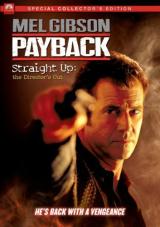
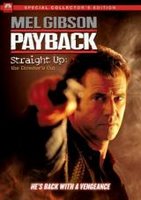
PAYBACK

This 1998 Mel Gibson revenge flick seems an unlikely candidate for this article, since it was greeted with indifference and seemed to be a quick studio moneyspinner. But Brian Helgeland’s adaptation of Donald Westlake’s novel The Hunter (previously filmed as Point Blank with Lee Marvin) actually had grander, darker goals before he was removed from the director’s chair and 30% of the film was reshot by production designer John Myhre (although some say by Gibson himself), allegedly to make Gibson’s character more likable and the project less risky.

Payback was Helgeland’s first film as director after a string of successful screenwriting assignments (he would later direct A Knight’s Tale and script Mystic River), and he sought to make a pulpy but smart film noir with a genuinely amoral protagonist, and this was largely how the film was publicised, despite the reshoots having sanitised the true intensity of Helgeland’s vision. Their scale was such that a completely new villain was introduced, played by Kris Kristofferson, as was an entire kidnapping subplot. To add insult to injury, Helgeland was fired during post-production only one day after winning an Oscar for his L.A. Confidential screenplay.

Thankfully, Payback: Straight Up – The Director’s Cut is coming to DVD in the US in April. According to Harry Knowles at Ain’t It Cool, Helgeland has waited until no single executive who had been involved with the reshoots remained at Paramount, and hopefully his patience will yield a new appreciation for his film; perhaps it will be regarded as a distinctive vision rather than a bland studio concoction. Clocking in at 90 minutes – 10 shorter than the theatrical cut – Payback will either reveal itself as merely average in a new way or an unseen crime classic. The original version certainly has its supporters, such as Knowles in his open letter to Paramount. Helgeland is also interviewed on the new cut here.

EXORCIST: THE BEGINNING

Another entry, another director firing. After the success of an extended version of William Friedkin’s The Exorcist in cinemas, Morgan Creek Productions decided to put a new instalment into production despite the tepid reception of the two existing sequels. John Frankenheimer was hired to helm a prequel chronicling the Father Merrin character’s first encounter with Satanic forces in post-World War II Africa. When Frankenheimer died during pre-production, Paul Schrader, director of Mishima and American Gigolo and writer of Scorsese’s Taxi Driver and Raging Bull, was brought in to replace him. Schrader typically worked on the Hollywood fringe, so his taking on a franchise film came as a surprise.
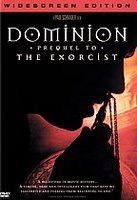
Schrader wasn’t phoning the film in though, as became clear when Morgan Creek saw his initial cut and were horrified by the lack of gore and traditional ‘scares’. Schrader had delivered a thoughtful contemplation of good and evil in the light of Christian ideologies, and production head James G. Robinson believed that his summer slam-dunk was down the tubes. Schrader was promptly fired from the film and Renny Harlin, he of Cutthroat Island and Deep Blue Sea, was appointed as the project’s third director to reshoot certain scenes. Actors were recast (except for Stellan Skarsgard as Merrin), the script rewritten, and ultimately, the entire film reshot despite an initial mandate of only conforming Schrader’s work to more mainstream horror film conventions. Exorcist: The Beginning was released to mediocre box office in August 2004.

Of course, film fans lurked as a spectre of pressure on Morgan Creek and Warner Bros. at the news that a studio had fired a quality director, so Schrader’s version remained a topic in such circles. It was initially announced as an inclusion on the Exorcist: The Beginning DVD, but that didn’t eventuate. Warner Bros hired Schrader’s editor on the film to create a releasable cut, and he promptly went behind the studio’s back to allow Schrader the chance to finish his movie. Finally premiering at the Brussels International Festival for Fantastic Film in March 2005 to good reviews, Warner Bros released it as Dominion: Prequel to The Exorcist in a very limited run opposite Star Wars Episode III two months later, with Morgan Creek claiming that it had always intended to release Schrader’s version…

While Dominion has hardly been praised as a lost classic (many reviews claim it suffers from different but equally fatal problems to Beginning), the outcome of the project is genuinely historic. For two wholly distinct versions of the same basic story to exist simultaneously in the marketplace is probably unprecedented (until last November – see below), and will serve as a wonderfully clear example of how external forces can impact the execution of an idea. Dominion is now out on DVD in America and the UK and I look forward to seeing both versions soon.

There's a summary from Entertainment Weekly here and a great article from the typically frank Guardian here.

KINGDOM OF HEAVEN

I’ve already written about the theatrical and director’s cuts of Kingdom of Heaven during my pre-Remote Wanderings days, and shall republish them here soon. Suffice to say, the release of Ridley Scott’s longer, preferred, and far superior cut of the film one year after its botched cinema release sets a wonderful precedent for DVD’s power to repair the mistakes of a studio’s shortsighted marketing campaign. In particular, it signals the ability of a home entertainment division to facilitate artistic prosperity in contrast to the distribution arm’s opening weekend fixation, even if the almighty dollar is still in their gunsights.
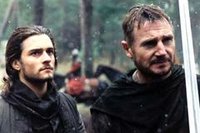
The subplots, characterisations, clarity, and texture that the director’s cut of this film unearth restore it to fighting fitness. I wouldn’t go as far to call it a modern classic as some vindicated reviewers have – it’s a little too stately and dry for that – but Kingdom of Heaven is still moviemaking that just doesn’t happen anymore, a subtle epic that’s significantly more mature and thoughtful than Scott’s admittedly great but largely yarn-spinning Gladiator. Seek out this DVD, even if you found the version you saw in the cinema turgid and uninvolving. It fixes that.

SUPERMAN II

So much has been written about the Richard Donner Cut since its release in November that I couldn’t possibly offer any new insight. Suffice to say that like Kingdom of Heaven, Warner Bros. restoration of Richard Donner’s version of his Superman sequel is a triumph for DVD. Donner was fired from the film after shooting the vast majority of footage and replaced with Richard Lester after a two-year halt in production (the first two Superman films were actually shot back-to-back). Since Donner didn’t complete filming, this new cut cannot hope to be exactly what he would have made (it’s forced to recycle the world-spinning ending of the first film, and even uses a screen test between Christopher Reeve and Margot Kidder), but it’s damn close.
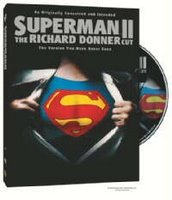
I’ve yet to see the new version, and after such a long campaign by fans there is a surprising amount of dissent as to which version is better, but the consensus is that the tone is decidedly different. Gone is Lester’s irreverent, almost jokey take on the material and returned is Donner’s respect for Superman’s mythological resonance. To cap it off, editor Michael Thau (who has achieved something immense with this version after near-archaeological investigations) restores an entire lost Marlon Brando performance. Brando’s hugely paid work on the project extended to the second with several scenes between he and Reeve, but the producers jettisoned the footage for the release to recoup some of the costs of reshooting the film with Lester.

Even if you’re not a Superman fan, Superman II now becomes absorbing in its two disparate takes on the same story – just like Exorcist: The Beginning – and the restoration of a vision thanks to the power of fan support and technological accomplishment.

For a comprehensive look at the road to the Richard Donner Cut, visit Superman Cinema, one of the principal campaign bases for its release.

HEAVEN’S GATE

Michael Cimino’s 1980 Western epic starring Kris Kristofferson, Christopher Walken, and Isabelle Huppert is rightly infamous, precipitating as it did the downfall of a studio. Cimino’s film was mauled by critics, failed at the box office, and failed to earn back its hugely expensive budget, equivalent to over $100 million today, virtually unprecedented at the time. While it didn’t bankrupt United Artists as has been suggested, the studio’s owners backed out of filmmaking altogether because of the damage that Heaven’s Gate did to their reputation, leading to the studio’s sale to MGM.
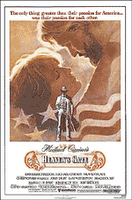
That’s a hell of a lot of preconceptions for a film to be saddled with, but Heaven’s Gate has been enjoying a critical reappraisal since being salvaged in the 1980s by cable network Z Channel. Founder Jerry Harvey elected to broadcast Cimino’s early 219-minute cut as opposed to the 149-minute theatrical release, a move that led to his network’s reputation as a saviour of shunned movies. The endeavour also originated the ‘director’s cut’ term and proved them to be marketable. This version has been the only one released on VHS and DVD, so this doesn’t exactly qualify as a lost cut, but it has taken many years for Heaven’s Gate to gain respect on a wide scale – some still sneer at its excesses, and it has an underdog status that led it to being shown in a visually remastered form at several film festivals in 2004 with an accompanying documentary about the whole fiasco.

In her review of the festival screening, critic Margaret Pomeranz said that she had been waiting to see Heaven’s Gate on the big screen since the 1980s, believing that its grandeur needed to be seen in cinemas first regardless of the film’s flaws. I’m hoping that I get a similar chance, as Heaven’s Gate, while not lost in availability, is certainly still a little lost in its legacy.

BLADE RUNNER

Yeah, I know – duh. But Blade Runner is too glorious a film, and thus even more interesting in its role as the ambassador for lost cuts, to not include in this feature. The release of the Director’s Cut in 1992 was the culmination of a decade of gradual discovery of the film thanks to VHS after its muted cinema release, and much has been made of Blade Runner’s significance as a piece of lost-and-found culture. What’s less known though is that the Director’s Cut was hardly the be-all and end-all.
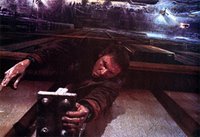
Seeking to capitalise on the huge success of an unearthed workprint in limited release (see Paul Sammon’s superb book Future Noir: The Making of Blade Runner for the complete story), Warner Bros. rushed a more polished version into theatres. Ridley Scott had time to fix his most important objections to the theatrical cut – the addition of a film-noir voiceover and a happy ending for Deckard and Rachel – but he wasn’t even able to supervise these changes, let alone remedy the many other mistakes perpetrated on his film in 1982. Thankfully, he was able to create a Final Cut for DVD release in 2000, but legal disputes held up its release for years. Only last year was a special edition DVD release of Blade Runner announced, after speculation that the entire venture was now doomed. Warner Bros. reissued the bare-bones Director’s Cut disc with a remastered transfer last October, but will screen the Final Cut in cinemas later this year and, soon after, release a jam-packed edition featuring multiple cuts of the film (the theatrical cut and its voiceover still holds interest as a curio) and myriad bonus features. The new DVD comes from longtime Scott DVD producer Charles de Lauzirika, who has created benchmark documentaries and hunted for rare extras for the Alien films, Gladiator, Kingdom of Heaven, and others. He claims that those DVDs were just practice for Blade Runner, which will be the “master thesis”. Colour me excited.

So while Blade Runner has hardly suffered in the public and critical eye (the film is now heralded as a masterpiece of science fiction and of cinema, with numerous books written about its influence and workings as a text), it needs to be included on any list such as this because of how Scott’s film was rescued, even with merely two straightforward but profound changes, and how it brought the possibility of a lost vision into the popular consciousness.

THE NEW WORLD
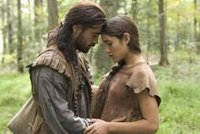
I’m bending the rules here, as this isn’t really a lost cut. Terrence Malick had full control of the cut he released to theatres of his sublime take on the Pocahontas story, but his producer Sarah Green has promised that a 3 hour-plus version is waiting in the wings for a DVD release that is even more Malickian than the meditative film we have already seen. The New World has been fluid in its incarnations from the start, with Malick releasing a 150-minute cut in limited release, withdrawing it, and issuing a 135-minute version for wide release. Those lucky enough to see the original version say that it was surprisingly different, altering the motivations of principal characters. Whether this version will ever be seen again, or whether it needs to be if the 3 hour cut comes out, is unknown at this point, but a different perspective on this tantalising film, which is developing quite a cult following after its anaemic release a year ago, will be most welcome. And if it succeeds, perhaps it will inspire Malick to revisit The Thin Red Line after all. 

For a comparison of the two theatrical cuts, check out the entry at The House Next Door.

Blood Diamond

Political sensitivity and Hollywood convention have never had the easiest working relationship. Before a discussion of a political film can get into the sophistication and balance of its examination, a script has to be equivocal and nuanced, subtle and measured. The narrative tropes of the Hollywood thriller - the love interest, revenge and catharsis, or extreme danger - often lumber a delicate political idea with excess baggage.

Blood Diamond is such a film. Although an exhilarating and quite accomplished thriller (if not a particularly memorable one), Edward Zwick’s latest weighs itself down with disjointed banter and misplaced emphases. Set in civil war-stricken Sierra Leone in 1999, the film’s harrowing opening sequence sees fisherman Solomon Vandy’s (Djimon Hounsou) teenage son abducted by rebels to be transformed into a machine-gun wielding soldier of the cause. Vandy is spared to work in the diamond fields, where he finds a sizable, priceless diamond and hides it. After the government raids the operation, he crosses paths with Leonardo DiCaprio’s Danny Archer, a former Zimbabwean soldier turned mercenary and diamond hunter. Archer learns of Solomon’s secret and begs him for the location; in return he will help Solomon find his family.

Blood Diamond certainly scores points in muddying its white lead’s ethics, far moreso than those of Tom Cruise in Zwick’s last effort, The Last Samurai. Archer is ruthless and selfish, and for most of the running time we are unsure of whether he cares a thing for Solomon and his plight. However, it’s still a shame that a commercial American film about Africa needs a white window into the story. Sure, DiCaprio’s character is African himself, but his arc reveals little of the social and economic situations plaguing African nations, whereas Hounsou’s Solomon is in the thick of it, and could speak volumes about the issue if he were placed at centre stage. Instead, Solomon is occasionally told to wait while Archer discusses something with journalist Maddy (Jennifer Connelly) or his boss (Arnold Vosloo), exposing an unsettling disparity. And while Zwick’s compassion for those citizens blighted by the conflict diamond trade is clear – this is far more conscientious a script than it could otherwise have been, and Solomon is hardly inconsequential – he still makes unfortunate concessions to middle-of-the-road Western perceptions about Africa. For instance, we are forced to endure Connelly get out of trouble with angry forest-dwelling locals by sweet-talking them into some photos, with one commenting to his men that she reminds him of her wife. Please…

There are several such occasions that draw us away from the sincerity of the topic, veering the film away from Constant Gardener territory into somewhere more dismaying. With this and The Last Samurai, Zwick is developing a trend for morally troubled but otherwise heroic white guys doing great things for a distant people, whereas in Fernando Meirelles’s film the very point was the effect that Western dominance and exploitation was having on Africa. Blood Diamond is less probing than that, briefly featuring the London diamond buyers at the end but refusing to inject any shades of grey or explore the complexities of their end of the deal. Zwick's film certainly works as a potential trigger for audiences to consider these issues, but doesn’t take us much further than that. And strong performances by Hounsou and DiCaprio (sporting a quality accent) and intense action sequences certainly make that trigger more likely to fire in some viewers. It’s worth a shot.

Saturday, January 13, 2007

Happy Feet

The two trailers I saw for Happy Feet did not promise good things. The first just featured a load of tap dancing penguins – it didn’t tease me greatly. The second was remarkable in its lack of decent lines or an appealing premise. The notion of a penguin who can’t sing but can tap dance seemed not pleasantly ludicrous, but inanely ludicrous and a shameless excuse for lots of Disney-friendly songs.

Of course, Happy Feet isn’t a Disney or Dreamworks production, so I should have had more faith. It so happens that the premise yields a disarmingly engaging and unpredictable plot, the songs are few and inoffensive, and the humour is of a kind that can’t be easily pillaged for a soundbite. To cap it off, George Miller’s return to directing for the first time since Babe: Pig in the City in 1998 is visually wondrous for both its vistas and its propulsive action. It’s especially impressive given that this is Miller’s first foray into animation and Sydney studio Animal Logic’s first feature length animation. Happy Feet is a dazzlingly beautiful film, its Antarctica a fully-rendered environment that portrays the requisite sense of vastness. A scene where principal character Mumble (Elijah Wood) dives from an enormous cliff is gobsmacking, vertigo-inducing, and utterly thrilling. Our senses are forced to experience space again and again, the camera following the characters around as other birds and killer whales throw them about so the audience shares their disorientation and panic. Although not an animation expert, I’d wager that Happy Feet constitutes a landmark in how animated sequences are constructed.

But this is more than a show reel. The characters are appealing, with Mumble staggeringly cute as a baby in appearance and voice and engaging as an Elijah Wood-voiced ‘teen’. Robin Williams is fun as prophet Lovelace but hilarious as Ramon, a Spanish-sounding adelie penguin whose dialogue is often incomprehensible but hilarious in cadence (I want to get the DVD just to read the subtitles for his scenes). I’m curious about the choice to give the emperor penguins American accents and the adelies Spanish ones, and I can’t decide whether it’s harmless or crass (the grand, tallest species with the beautiful voices being American is somewhat off-putting). Sadly though, the supporting cast is otherwise dull, with Hugh Jackman, Nicole Kidman, Brittany Murphy, and Hugo Weaving wasted in one-note roles that lack the colour and wit of a Pixar cast.

But Mumble and Williams sustain the film, as does the plot, unexpectedly veering into environmentalist areas that in retrospect make complete sense. The tap dancing gimmick actually facilitates a subtext, sans soapbox, that will get kids thinking about nature and the environment without boring them, and it’s a tremendous achievement by Miller. And the film is consistently exciting as the penguins discover the source of their woes, encountering killer whales and icebreakers in bravura sequences.

The only downside of Happy Feet is the lack of an appealing supporting cast, but that’s challenging when foregrounding a colony of penguins, especially since Miller strives for physical realism. Superficial differentiation and eccentric behaviours are therefore limited, but Miller does well with the restraints of his own premise. Happy Feet is quite an achievement, and establishes Animal Logic, not Dreamworks or Fox, as the potential Pixar competitor. 

Casino Royale

I’ve never been a James Bond fan. Like Star Wars, it’s one of those franchises that eluded me in my formative years, and unlike that cornerstone I was decidedly unimpressed when I finally came across it. Even now I fail to grasp what so many find so entertaining about Bond, chauvinistic piece of two-dimensional cardboard that he is, especially since the majority of his movies are over-the-top and terrible. And spare me the whole ‘so bad it’s good’ argument. That’s fine for direct-to-video dross, but not sufficient for one of the biggest franchises in cinema history.

Thankfully, Casino Royale fixes so many of the problems I had with Bond, and much has been made of this. No more outlandish gadgets and horrendous puns, and the script insists on Bond being recognisably human. He’s still a ridiculously talented and unflappable bugger, but this is used – at last – to point out the emotional restraints he has placed on himself as a result. The script gets the ball rolling and Daniel Craig kicks it all the way to Sweden. He’s utterly magnetic in the role, ensuring both that we believe Bond has been in the military and that we can see the results. The vacancy in his eyes seals the deal. By taking Bond to such a remote extreme, Craig actually makes him more relatable by demonstrating what he is lacking.

He’s well supported by Eva Green, Mads Mikkelsen and some spectacular action sequences. The opening chase scene is gripping in its sheer audacity, taking us through car windows, up cranes, and into embassies, and it’s matched by a race-against-time on an airstrip, a stunning car flip, and other extravagances. While enormous, these sequences are somewhat credible and taken seriously, unlike the invisible car and other pun-ridden pursuits of the Brosnan films (although Goldeneye was good, I’ll admit). More remarkably, the action is supported by some poignant character moments, particularly when Bond comforts the shaken Vesper (Green) after he kills two men in front of her. Green herself enjoys a Bond girl role that barely resembles its predecessors. Gone are the condescending and useless portrayals of women of films past; Vesper can see straight through Bond’s shit, but is intrigued by what drives him all the same.

Sadly, the film doesn’t understand economy, taking far too long to tell its story and drawing out its climax painfully, making the idea of rewatching the film seem arduous. The poker game mid-section is inherently problematic, and while the script tries to enliven it by placing action in the game breaks, it’s still a hefty chunk to wade through. Plus, the build-up to the climax is so transparently doomed that the following twenty minutes seem oddly tacked on and a little dreary. And on a side note, why did they bother to cast Jeffrey Wright in such a small, unremarkable role? I hope they’re preparing to use him more substantially in the sequels, which in another break from tradition may well continue the story of this film. Like fellow rebooter Batman Begins, Casino Royale has cumbersome parts but still does a tremendous job of liberating the Bond paradigm from tiresome excess and reactionary worldviews.

Night at the Museum

In the interests of accuracy, let me state that I would not have gone to see this film were it not a social occasion in a small town where we’d either seen or were disinterested in everything else on offer. Director Shawn Levy’s work to date has appeared to be singularly uninspiring so I haven’t bothered to sample it: The Pink Panther and Cheaper by the Dozen (1 and 2) screamed ‘derivative studio comedy!’ Having seen Night at the Museum, I can confirm that my suspicions about Levy were correct: he has virtually nothing to offer visually, comically, or actionly (yes, I made that up, but I’m sure he would too).

What’s most agonising about Night at the Museum is that it takes the premise for an potentially exciting, funny family film and utterly fails to capitalise on it. Instead exploiting the inevitable but endearing and clever ramifications of a concept ala Toy Story, we have Ben Stiller’s vendetta against a small monkey that keeps urinating on him. Honestly, what is America’s obsession with monkeys? Great animals, don’t get me wrong, but their comedic value should wear out pretty quickly. But no, half of YouTube seems to be chimps eating their own shit. Other jokes long since done to death fill the entire running time. How does a studio comedy lead react to a horde of bloodthirsty huns? He talks Attila into recalling a troubled childhood that has made him lash out. Amateur therapy on burly violent types followed by cathartic tears is another old standby that this school of comedy never tires of. Talking of convention, surprise, surprise, Stiller plays a divorcee whose son is becoming distant. Cue the ultimate bonding opportunity, some valuable lessons, etc etc.

Stiller himself is cruising, big time. He’s a great talent who chooses to regularly slum in dross like this, Along Came Polly (“from the co-writer of Meet the Parents”!), and Starsky and Hutch, punctuated occasionally by some branching out in Arrested Development and Meet the Parents. It’s a shame how he and Owen Wilson continue to peddle the same persona from film to film given that they are capable of much more.

Worse still, he has a strong supporting cast completely wasted in a painful climax about a mystical amulet that not only brings the museum exhibits to life, but inexplicably makes the elderly security guards feel young again at night. Dick Van Dyke and Mickey Rooney get nothing to do but give it a go. Plus, what the hell is Robin Williams doing here?! His dull character and lines make this the most pointless utilising of Williams’ talent in a long time. Likewise, Ricky Gervais and Steve Coogan seem a little bewildered in their cameo roles (actually, when Gervais is on screen, it seems to be a different film, his deadpan style amusingly at odds with the surrounding sledgehammers), although Coogan and Wilson (who has his own cameo as a cowboy with clichés to spare) get the film’s single laugh-out-loud gag, a witty mining of the premise that Pixar would be proud to use. It’s a shame that it’s almost ruined by a Brokeback Mountain joke that would have been lame even when it was timely.

There’s precious little to recommend this film, so put it from your mind, except to be depressed that it has been a monster holiday hit in the US. Sigh…. 

Flags of our Fathers

Clint Eastwood’s Flags of our Fathers is largely noteworthy in terms of the project it ultimately became a part of: Eastwood’s Iwo Jima duology, also comprising Letters from Iwo Jima, a separate film telling the same events from the Japanese perspective. I have yet to see the companion film, but hopefully it is more satisfying and purposeful than Flags, which in its own right struggles to justify its existence.

It’s a shame to imply that an entire subgenre has to be shut down for a while, especially given how vitally important it is for us to continue to remember and consider the events depicted, but World War II cinema is in danger of repeating itself to the point of numbness. After the 1998 defining one-two punch of Saving Private Ryan, with its visceral immersion, and the existential contemplation of war’s nature in The Thin Red Line, new approaches must be found to honouring the fallen on film, as collectively Spielberg and Malick’s pictures form a definitive exploration of the topic for our generation. Flags of our Fathers’s sensibility stands somewhere between the two, although its battle scenes are sadly cut from the same cloth as Private Ryan. Partly due to the precedent that Spielberg set, they cannot compare in intensity and are redundant due to the similarities. Conversely, Eastwood quietly examines the toll of war, but unlike Malick, keeps his analysis more grounded and resists the big questions.

This is where he could have found a purpose for Flags, but we are kept at arm’s length. The narrative alternates between the battle for Iwo Jima and three of its soldiers enlisted to campaign for financial support for the war back home. They were among those in the iconic flag-raising photo that inspired the book by James Bradley and this adaptation, which reveal the shameless commercialisation of the war and its soldiers for the sake of perpetuating it. We follow John Bradley (Ryan Phillippe), Rene Gagnon (Jesse Bradford), and Ira Hayes (Adam Beach) through one publicity stunt after another, and each have varying degrees of resistance to the process. Sadly, Beach’s amounts to a lot of unearned crying, Phillippe is too stoic and betrays insufficient feeling to evoke our sympathy, and Bradford, the most interesting of the three, does well with a different performance pitch for a war film, but he isn’t enough to save the story.

Flags is tragically restrained, almost stately, and while it is essential that we keep our soldiers and their stories in the public memory, I hope that we can do better than this. Innovation is not just in the interest of the viewers, because by forming new approaches and perspectives on this material, we do further justice to the immense psychological and ideological complexity of war and the struggles of its fighters, or at least the most of the little we ever can. Quentin Tarantino may eventually film his World War II project Inglorious Bastards, and while his cool, pop sensibilities run the risk of making war more shamefully entertaining than the movie biz has already made it, his idiosyncrasies may be wedded to a sophistication and respect, which together will hopefully illuminate a new facet of the miasma of conflict. This should be the goal of any war film after so much has been achieved in the genre, and not just for we film buffs.