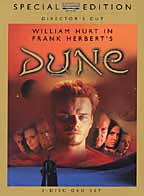
Tuesday, January 16, 2007

Kingdom of Heaven Revisited

As promised, here is a repost of my pre-Remote Wanderings reviews of Ridley Scott's Crusades epic Kingdom of Heaven. The first is of the theatrical cut from June 2005, the second of the Director's Cut from June 2006. It's been interesting to look back at these reviews and see how my style has changed (and hopefully) improved in only a year of intermittent work. Consequently, please forgive any clumsiness or repetition. Please click the 'Read More' link below for the full post.

THEATRICAL CUT - JUNE 2005

Ridley Scott is a damn fine director, there’s no two ways about it. Despite his critical and commercial slump between Thelma and Louise in 1990 and Gladiator in 2000, the man’s largely been pumping out interesting, well-made movies, and unlike another major director who’s as comfortable creating small dramas as he is epics—Steven Spielberg—Scott manages to disappear into every film he does. Whether it’s Jurassic Park or Catch Me If You Can, Spielberg’s films generally feel like Spielberg films. It’s not a bad thing, it’s just that you can feel his presence as you watch, whereas Scott is a chameleon: it’s hard to believe that the same guy made Gladiator and Matchstick Men in the space of three years. He alters his directorial style drastically with every movie he makes so that any signature methodology refuses to form, but he’s always a terrific all-rounder despite this; his movies are consistently well-acted, well-shot, and well-written.

So with this in mind, Kingdom of Heaven becomes quite the film to ponder. After the solid Gladiator (not Best Picture-worthy, but an excellent film nonetheless), the prospect of another historical epic from Scott was enticing, especially after the underwhelming Alexander and the almost amateurish Troy. Scott’s record gave an all-too-rare guarantee of at least reasonable quality, and he was tackling fairly fresh material, as the Crusades have never been substantially addressed on film before, certainly not enough to yield a definitive motion picture on the subject. So if Scott could apply the balanced formula of Gladiator to this particular area, then we could be confident in a solid historical epic, right?

It’s tragic to see a director as consistent as Scott, and particularly one who is going through a period of sustained creative excellence, perform so underwhelmingly. Technically, Kingdom of Heaven is superb: the cinematography is gorgeous, the visual effects successful but unobtrusive, the score quite serviceable, and the historical detail rich. Likewise, the acting is nothing to sneer at - Liam Neeson is terrific as always, though he appears far too briefly; Jeremy Irons makes a welcome return to ‘big’ cinema with a typically strong performance; and even Orlando Bloom is perfectly adequate in the lead as Balian. He may not exude the intense charisma of Russell Crowe in Gladiator, but his lack of experience as a leading man is certainly not distracting. While his performance is nothing spectacular, it’s well suited to the film and doesn’t scupper it as many expected it to.

No, the problem with Kingdom of Heaven is whichever studio executive forced Scott to cut around 80 minutes of footage for theatrical release, thus reducing a nearly 4-hour epic to 2 hours 20. Entire subplots were excised. Scott hasn’t spoken too extensively about these cuts, but there are reports that while he was certainly not happy about them, he was relieved that he at least got to perform them himself. Of course, until the full cut is seen, the brutal editing cannot be presumed to be the reason for the film’s failure. However, it makes a great deal of sense, because the film’s main problems are insufficient narrative detail and, most crucially, characterisation. Whereas Gladiator was very efficient in its development of character, Kingdom was clearly adopting a subtler, more leisurely approach, more akin to epics of old like Lawrence of Arabia. There may well have been entire scenes that did not further the plot, but gradually revealed facets of the characters that would make them resonate as their roles in the plot came to prominence. With longer films, particularly those over three hours, the feeling that you’ve been engrossed in this story for a substantial length of time is utilised to facilitate characterisation. This doesn’t mean that directors make their films lengthy so that audiences will relate to the characters due to sheer overexposure - such an approach would naturally fail anyway. Rather, if the pacing is well-constructed (see The Lord of the Rings and Titanic for how well a long film can be paced), then the audience will remain engrossed but still be aware that they have spent a substantial amount of time involved in the story and the characters. This approach allows for a more subtle, accumulative approach to characterisation, and is especially appropriate when the events of the story span years (Gladiator, for example, takes place over a comparatively short length of time). Kingdom does cover a quite substantial time period, and I’m confident that this more gradual (not to be confused with ‘slow’) approach is what Scott was employing, so that the ruthless editing of nearly an hour and a half of footage rendered the approach moot and virtually destroyed the film’s ability to develop character and narrative appropriately.

This compromise is painfully evident throughout the film. Major events happen far too quickly without enough build-up. Relationships are touched upon as having significance even though there have been far too few scenes devoted to them. Supporting characters can be dispatched in a pivotal fashion, but the film leaves us questioning why their death is supposed to matter. There are a huge number of instances of these deficiencies, and combined, they wreak a terrible effect on both the climax and the audience’s overall investment. The climactic siege of Jerusalem is fairly dull in terms of being an affecting experience for the characters, because it happens so quickly in relation to their positions within the film. The leader of the Muslims, Saladin, is painfully underdeveloped, and when he confronts Bloom’s character, the scene oozes significance even though the audience is left struggling to remember when it was ever earned.

As for audience investment, the fact that Bloom’s character largely remains a cypher is what cripples the film. This is not Bloom’s fault, but rather the film’s (or perhaps, the theatrical cut’s) failure to provide enough instances for the audience to get to know him, understand him, and empathise with him. Balian is our window into the immense and expansive conflict of the Crusades, and if we cannot appreciate his motivations on anything but a superficial level, then that conflict will be rendered less interesting. The fact that the supporting characters cannot compensate for this due to their own lack of development only makes matters worse. But again, what’s most telling is that certain key incidents involving these characters carry a significance that must have been earned in other scenes; the focus is too strong, and the resonance they are supposed to exude too apparent in a surface context.

An example is Brendan Gleeson’s character of a political manipulator who assists Marton Csokas’s newly-crowned king in his ambitions for war. When Gleeson exits the film, he has literally appeared for three or four short scenes, with barely any chance to make an impression on the storyline or on audiences. Yet when he does depart, the event is foregrounded in its brutality, and is clearly meant to impact Csokas’s character in that one of his key allies has now been lost. Yet I was sitting there uncertain as to why we were supposed to care. When were we ever given the impression that Gleeson’s character remotely mattered? His final scene implicitly states that he does, yet there has been no opportunity for this to be justified. Again, the scene screams of lost footage, and like many others in the film, fails to make the appropriate impact due to a lack of narrative investment leading up to it. Not only is this the problem with individual scenes, but with the film as a whole.

Within the theatrical cut of Kingdom of Heaven, there is an excellent film screaming to be released from its mediocre confines. No film has demanded an extended cut this powerfully in many years, and although such a version may ultimately reveal that the film’s problems are endemic regardless of length, it’s so hard to believe that such a competent and experienced filmmaker as Scott would film such a poorly developed script. Of course, even the best director can make a dud film, but more often than not, this is due to a failure to live up to its ambition, even with the resources that were available to it. Scott’s ambition for Kingdom of Heaven seems to have been chopped off at the knees, and it’s interesting to note how very few reviews for it are strongly positive or negative - instead, they are courteously ambivalent, perhaps tacitly realising that there is potential in this film that has not been seen.

If what we’ve seen of Kingdom of Heaven was supported by a good hour of character development and narrative enunciation, then the currently available material would surely resonate more strongly. Even before I knew for sure that a substantial amount of footage had been cut, I reflected on the film (even as the credits rolled) and felt that great swathes of the film must be missing - I, and those I saw it with, had the common sentiment that “that can’t be all there was”. In themselves, the theatrical cut’s scenes are solid - they just lack the context to be successful as part of a whole. There are rumblings that Scott’s full cut will be released on DVD next year, and I’d wager that a profoundly different, and much, much better film will reveal itself in that form. If it is so radically different, and subsequently makes the broader impact that such a version should, Kingdom of Heaven could stand as possessing the most important alternate cut of a film in many years, perhaps since Scott’s own Blade Runner in 1992. There could be a classic in there somewhere... just don’t bother seeing the film as it’s available now. The real version awaits, and so the theatrical one only merits attention now on the off-chance that the extended cut ends up being a revelatory experience - let’s hope.

DIRECTOR'S CUT - JUNE 2006


A recent triumph for cinema fans is the DVD liberation of Ridley Scott’s director’s cut of Kingdom of Heaven after its butchering at the cinema in May of last year, wherein Fox ordered Scott to remove 40 minutes of footage in order to fit in more screenings per day, leaving a visually spectacular but narratively hollow and disjointed failure behind. In my review of the theatrical cut, I had suspicions that such cuts had occurred; it was so palpably clear that major things were missing. When I discovered that this intuition was correct, I began holding out hope that the real version of the film would one day be seen.

And now, only one year later, the director’s cut is here – clearly Fox’s home video department has different bosses to its film unit. Thanks to the glory of Amazon, I’ve just taken it in.

The various reviews of this DVD, and of the new cut when it had a brief theatrical run last December, are correct: this is a substantially improved film. I haven’t seen the theatrical cut since last May, and thus couldn’t tell for sure whether some scenes were new, but the shift in pacing is abundantly clear. This is a full, vital movie at last, virtually a separate experience. While I can’t quite hail it as a classic as others have, this is of a very different tenor to most movies today. They really don’t make films like this any more – it’s a throwback to the luxurious timescales of David Lean epics like Lawrence of Arabia and Doctor Zhivago. In comparison, Scott’s Gladiator is a small, insular yarn, and in a lot of ways, probably felt like preparation for this movie. While lacking that film’s streamlined narrative and dynamic, visceral characters, Kingdom of Heaven is still working on another level to Scott’s last period piece. The plotting and characterisation are much more subtle, more akin to Lean and Kurosawa than the bombastic Gladiator (a film I love though, don’t get me wrong). Plus, the themes and political subtext are a great deal more relevant to today, continuing Scott’s willingness (along with Black Hawk Down) to shed his ill-deserved reputation as a predominantly visual stylist and engage with contemporary issues.

These facets comprise Kingdom of Heaven’s true nature, which is revealed both by the involving pacing that the new footage provides and by the contents of that footage. An entire subplot was gutted from the film involving Sibylla’s (Eva Green) young son, who ascends the throne following his uncle’s death – he wasn’t even mentioned in the theatrical cut. The storyline has tendrils in every facet of the narrative; ‘the boy’ is mentioned in so many key scenes that the scale of the cuts becomes abundantly clear in the second half of the film. The subplot itself is very interesting, deepening the political machinations and transforming Sibylla from a glorified love interest into a fully-fledged character. It also gives her relationship with Orlando Bloom’s Balian a nuance and dignity that was largely absent in the other cut. Scott explains in his introduction that test screening audiences felt the story to be too tangential for the second half of the film, that it ruined the pacing – the ironic consequences of those criticisms is readily apparent now, as is their lack of validity. It slips into the film superbly, integral rather than superfluous – cutting it now seems unthinkable.

The other additions are less certain, although the film’s opening isn’t nearly as abrupt and features some fairly significant revelations. The priest Balian kills at the start of the film is actually his brother, and the local lord is the brother of Liam Neeson’s character, deepening his connections to the village he finds his son in. Plus, we discover that Balian is an enginer who has already fought in a war, which rationalises his miraculous practical strategies during the siege of Jerusalem. Balian benefits quite a bit overall, his character’s journey being more discernible. However, the new version sadly doesn’t reveal new depths to Bloom’s performance. While he was very capable in the theatrical cut and I have faith in his potential as an actor, he isn’t able to convey Balian’s transformation over the epic course of this film while constrained by the character’s stoicism. Although the script’s characterisation of him is allowed to run free in this cut, Bloom doesn’t quite match it. But as before, he’s more than adequate to the task.

As mentioned above, Eva Green’s Sibylla benefits the most. I can understand her frustration last year, as most of her best scenes hit the cutting room floor with her character’s son. And while the other supporting performances are no more sterling than they were in the theatrical cut, their characters no longer seem superfluous, afforded dramatic entries and exits that weren’t earned. When David Thewlis, Brendan Gleeson, and Jeremy Irons’s characters depart the film (and no, they don’t all die, so my allusiveness isn’t completely hollow), it’s a natural culmination of what has come before, not an inexplicable emphasis at odds with the character’s screen time.

As I expected and hoped, the new cut really does fix all the problems I had with Kingdom of Heaven, although it still remains a little emotionally distant. The subtle screenplay does have its pitfalls in providing less for the audience to intuitively latch on to, but it’s an acceptable price to pay for a film that so respects its audience’s intelligence. Here’s hoping that audiences rediscover this film, so it can be afforded its proper place in Ridley Scott’s career and this decade of cinema.

Monday, January 15, 2007

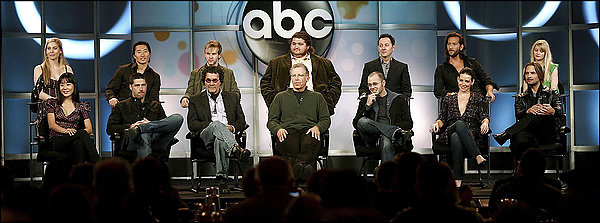
HALLELUJAH! Tremendous news for Lost fans


In a move that, if successful, will placate so many, Lost showrunner Damon Lindelof has announced at the Television Critics Association press tour in Pasadena that he and fellow executive producers JJ Abrams and Carlton Cuse are in negotiations with ABC to determine when the show should end.

This is shocking and blissfully good news. Although Lindelof does not state when that end will come (he hints toward the fifth season though) or when it will be announced, this is a huge turnaround from his previous comments that he, Abrams, and Cuse want to know when they can end their show but that their hands are tied by ABC’s economic desire to keep the show going as long as it is successful. One can imagine numerous factors that led ABC to consider the idea, principally the additional revenue streams of DVD and paid downloads and the bad precedent set by the stigma of The X-Files’s prolonged and neutered life, a dwindling existence made more unpleasant by the memory that creator Chris Carter had originally envisioned a mere five seasons for the series. The Sopranos stands as another example of self-harming elongation.

Lindelof has always been a refreshingly candid TV producer, clearly passionate about his show and willing to discuss the corporate obstacles that stand in their way or carefully considering objections to the show’s direction. Some choice and delightfully canny comments from he and Cuse include:

- “We were surprised when we went to ABC and started having that conversation. As opposed to them saying, ‘Fine, we’ll bring on new people,’ they said, ‘Well, when do you think it should end?’ And the conversations began.”
- “So Carlton and I are now able to sit down with them and say, ‘Remember in the very beginning when you guys were having us convince you that this thing could go on for years and years and years? And we all agreed it couldn’t?’ Well, now just because it’s successful doesn’t mean that’s changed.”
- “The reality is, they can produce a sixth or seventh or eighth season, but would anyone be watching? Because the show would be so miserable by that time. Was it really The X-Files anymore when [David] Duchovny and Gillian Anderson weren’t on the show? For me The X-Files wasn’t about, ‘Have aliens invaded?’ it was about Mulder and Scully, a skeptic and a believer. Once that element of the show was gone, the show was over. We don’t want to produce those episodes of Lost, and in fact, we’re not going to produce those episodes of Lost.”
- “At the end of the day, the season in its totality and the series in its totality is all that really matters. What’s really sad to me about a show like The X-Files is how great it was for six years. And we don’t look back on that show and say, ‘It was great,’ we say, ‘It was great, but…’ and that but is a very depressing thing.”
- “We’re no longer going up the hill. We’re starting to come down now.”

Can we ever recall a time when a network announced the end of a series potentially up to two years beforehand? Lindelof cites Richard Kimble catching the one-armed man in The Fugitive as an example, and that was in the 1960s. Interestingly, the ABC executive present at the panel, Steve McPherson, told reporters afterwards that no such discussions had taken place – either Lindelof let the cat out of the bag or he is trying to build support for the notion. Here’s hoping the publicity doesn’t jeopardise the move.

Regardless, if ABC goes ahead with this, it should rightly be hailed as a compassionate groundbreaker for the preservation of artistic integrity in television. To set such a long-term vision for a massively popular show’s end flies in the face of all accepted wisdom about American free-to-air network programming. And for viewers, the announcement will finally deliver the umbrella answer to all of the questions that Lost’s mythology has posed: yes, you will get the answers, and we will not drag them out. ABC is no doubt aware of this positive effect, as the ending announcement could bring frustrated viewers back to the show. There will be concrete proof that Lost knows where it’s going and you need not feel like a schmuck, so come and enjoy the ride.

Whether the audience likes the answers to Lost is another issue, but would have been regardless. For now, let us just bask in the possibility, however uncertain, that one of the most narratively visionary and deceptively demented television series of our time will be a ride blessed with unassailable creative integrity from here on out. Things could still go pear-shaped, absolutely, but a line has been drawn in the sand, and that’s something.

In another spot of good news, ABC appears to be bowing to pressure about how the series is broadcast. McPherson suggested that the all 20-something episodes of the fourth season might well be broadcast consecutively, following the successful 24 model, as opposed to the 6 and 17 episode chunks that the third season has been delivered in.

For comprehensive summaries of the panel, check out Maureen Ryan’s coverage and Melanie McFarland’s analysis.

Sunday, January 14, 2007

Lost Cuts, Part Two

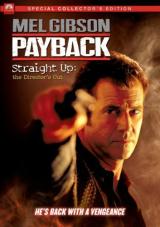
PAYBACK

This 1998 Mel Gibson revenge flick seems an unlikely candidate for this article, since it was greeted with indifference and seemed to be a quick studio moneyspinner. But Brian Helgeland’s adaptation of Donald Westlake’s novel The Hunter (previously filmed as Point Blank with Lee Marvin) actually had grander, darker goals before he was removed from the director’s chair and 30% of the film was reshot by production designer John Myhre (although some say by Gibson himself), allegedly to make Gibson’s character more likable and the project less risky.

Payback was Helgeland’s first film as director after a string of successful screenwriting assignments (he would later direct A Knight’s Tale and script Mystic River), and he sought to make a pulpy but smart film noir with a genuinely amoral protagonist, and this was largely how the film was publicised, despite the reshoots having sanitised the true intensity of Helgeland’s vision. Their scale was such that a completely new villain was introduced, played by Kris Kristofferson, as was an entire kidnapping subplot. To add insult to injury, Helgeland was fired during post-production only one day after winning an Oscar for his L.A. Confidential screenplay.

Thankfully, Payback: Straight Up – The Director’s Cut is coming to DVD in the US in April. According to Harry Knowles at Ain’t It Cool, Helgeland has waited until no single executive who had been involved with the reshoots remained at Paramount, and hopefully his patience will yield a new appreciation for his film; perhaps it will be regarded as a distinctive vision rather than a bland studio concoction. Clocking in at 90 minutes – 10 shorter than the theatrical cut – Payback will either reveal itself as merely average in a new way or an unseen crime classic. The original version certainly has its supporters, such as Knowles in his open letter to Paramount. Helgeland is also interviewed on the new cut here.

EXORCIST: THE BEGINNING

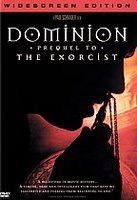
Another entry, another director firing. After the success of an extended version of William Friedkin’s The Exorcist in cinemas, Morgan Creek Productions decided to put a new instalment into production despite the tepid reception of the two existing sequels. John Frankenheimer was hired to helm a prequel chronicling the Father Merrin character’s first encounter with Satanic forces in post-World War II Africa. When Frankenheimer died during pre-production, Paul Schrader, director of Mishima and American Gigolo and writer of Scorsese’s Taxi Driver and Raging Bull, was brought in to replace him. Schrader typically worked on the Hollywood fringe, so his taking on a franchise film came as a surprise.

Schrader wasn’t phoning the film in though, as became clear when Morgan Creek saw his initial cut and were horrified by the lack of gore and traditional ‘scares’. Schrader had delivered a thoughtful contemplation of good and evil in the light of Christian ideologies, and production head James G. Robinson believed that his summer slam-dunk was down the tubes. Schrader was promptly fired from the film and Renny Harlin, he of Cutthroat Island and Deep Blue Sea, was appointed as the project’s third director to reshoot certain scenes. Actors were recast (except for Stellan Skarsgard as Merrin), the script rewritten, and ultimately, the entire film reshot despite an initial mandate of only conforming Schrader’s work to more mainstream horror film conventions. Exorcist: The Beginning was released to mediocre box office in August 2004.
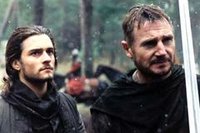
Of course, film fans lurked as a spectre of pressure on Morgan Creek and Warner Bros. at the news that a studio had fired a quality director, so Schrader’s version remained a topic in such circles. It was initially announced as an inclusion on the Exorcist: The Beginning DVD, but that didn’t eventuate. Warner Bros hired Schrader’s editor on the film to create a releasable cut, and he promptly went behind the studio’s back to allow Schrader the chance to finish his movie. Finally premiering at the Brussels International Festival for Fantastic Film in March 2005 to good reviews, Warner Bros released it as Dominion: Prequel to The Exorcist in a very limited run opposite Star Wars Episode III two months later, with Morgan Creek claiming that it had always intended to release Schrader’s version…

While Dominion has hardly been praised as a lost classic (many reviews claim it suffers from different but equally fatal problems to Beginning), the outcome of the project is genuinely historic. For two wholly distinct versions of the same basic story to exist simultaneously in the marketplace is probably unprecedented (until last November – see below), and will serve as a wonderfully clear example of how external forces can impact the execution of an idea. Dominion is now out on DVD in America and the UK and I look forward to seeing both versions soon.

There's a summary from Entertainment Weekly here and a great article from the typically frank Guardian here.

KINGDOM OF HEAVEN

I’ve already written about the theatrical and director’s cuts of Kingdom of Heaven during my pre-Remote Wanderings days, and shall republish them here soon. Suffice to say, the release of Ridley Scott’s longer, preferred, and far superior cut of the film one year after its botched cinema release sets a wonderful precedent for DVD’s power to repair the mistakes of a studio’s shortsighted marketing campaign. In particular, it signals the ability of a home entertainment division to facilitate artistic prosperity in contrast to the distribution arm’s opening weekend fixation, even if the almighty dollar is still in their gunsights.

The subplots, characterisations, clarity, and texture that the director’s cut of this film unearth restore it to fighting fitness. I wouldn’t go as far to call it a modern classic as some vindicated reviewers have – it’s a little too stately and dry for that – but Kingdom of Heaven is still moviemaking that just doesn’t happen anymore, a subtle epic that’s significantly more mature and thoughtful than Scott’s admittedly great but largely yarn-spinning Gladiator. Seek out this DVD, even if you found the version you saw in the cinema turgid and uninvolving. It fixes that.
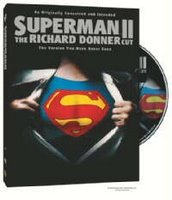
SUPERMAN II

So much has been written about the Richard Donner Cut since its release in November that I couldn’t possibly offer any new insight. Suffice to say that like Kingdom of Heaven, Warner Bros. restoration of Richard Donner’s version of his Superman sequel is a triumph for DVD. Donner was fired from the film after shooting the vast majority of footage and replaced with Richard Lester after a two-year halt in production (the first two Superman films were actually shot back-to-back). Since Donner didn’t complete filming, this new cut cannot hope to be exactly what he would have made (it’s forced to recycle the world-spinning ending of the first film, and even uses a screen test between Christopher Reeve and Margot Kidder), but it’s damn close.

I’ve yet to see the new version, and after such a long campaign by fans there is a surprising amount of dissent as to which version is better, but the consensus is that the tone is decidedly different. Gone is Lester’s irreverent, almost jokey take on the material and returned is Donner’s respect for Superman’s mythological resonance. To cap it off, editor Michael Thau (who has achieved something immense with this version after near-archaeological investigations) restores an entire lost Marlon Brando performance. Brando’s hugely paid work on the project extended to the second with several scenes between he and Reeve, but the producers jettisoned the footage for the release to recoup some of the costs of reshooting the film with Lester.
Even if you’re not a Superman fan, Superman II now becomes absorbing in its two disparate takes on the same story – just like Exorcist: The Beginning – and the restoration of a vision thanks to the power of fan support and technological accomplishment.

For a comprehensive look at the road to the Richard Donner Cut, visit Superman Cinema, one of the principal campaign bases for its release.

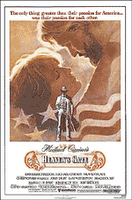
HEAVEN’S GATE

Michael Cimino’s 1980 Western epic starring Kris Kristofferson, Christopher Walken, and Isabelle Huppert is rightly infamous, precipitating as it did the downfall of a studio. Cimino’s film was mauled by critics, failed at the box office, and failed to earn back its hugely expensive budget, equivalent to over $100 million today, virtually unprecedented at the time. While it didn’t bankrupt United Artists as has been suggested, the studio’s owners backed out of filmmaking altogether because of the damage that Heaven’s Gate did to their reputation, leading to the studio’s sale to MGM.

That’s a hell of a lot of preconceptions for a film to be saddled with, but Heaven’s Gate has been enjoying a critical reappraisal since being salvaged in the 1980s by cable network Z Channel. Founder Jerry Harvey elected to broadcast Cimino’s early 219-minute cut as opposed to the 149-minute theatrical release, a move that led to his network’s reputation as a saviour of shunned movies. The endeavour also originated the ‘director’s cut’ term and proved them to be marketable. This version has been the only one released on VHS and DVD, so this doesn’t exactly qualify as a lost cut, but it has taken many years for Heaven’s Gate to gain respect on a wide scale – some still sneer at its excesses, and it has an underdog status that led it to being shown in a visually remastered form at several film festivals in 2004 with an accompanying documentary about the whole fiasco.
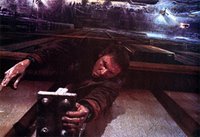
In her review of the festival screening, critic Margaret Pomeranz said that she had been waiting to see Heaven’s Gate on the big screen since the 1980s, believing that its grandeur needed to be seen in cinemas first regardless of the film’s flaws. I’m hoping that I get a similar chance, as Heaven’s Gate, while not lost in availability, is certainly still a little lost in its legacy.

BLADE RUNNER

Yeah, I know – duh. But Blade Runner is too glorious a film, and thus even more interesting in its role as the ambassador for lost cuts, to not include in this feature. The release of the Director’s Cut in 1992 was the culmination of a decade of gradual discovery of the film thanks to VHS after its muted cinema release, and much has been made of Blade Runner’s significance as a piece of lost-and-found culture. What’s less known though is that the Director’s Cut was hardly the be-all and end-all.

Seeking to capitalise on the huge success of an unearthed workprint in limited release (see Paul Sammon’s superb book Future Noir: The Making of Blade Runner for the complete story), Warner Bros. rushed a more polished version into theatres. Ridley Scott had time to fix his most important objections to the theatrical cut – the addition of a film-noir voiceover and a happy ending for Deckard and Rachel – but he wasn’t even able to supervise these changes, let alone remedy the many other mistakes perpetrated on his film in 1982. Thankfully, he was able to create a Final Cut for DVD release in 2000, but legal disputes held up its release for years. Only last year was a special edition DVD release of Blade Runner announced, after speculation that the entire venture was now doomed. Warner Bros. reissued the bare-bones Director’s Cut disc with a remastered transfer last October, but will screen the Final Cut in cinemas later this year and, soon after, release a jam-packed edition featuring multiple cuts of the film (the theatrical cut and its voiceover still holds interest as a curio) and myriad bonus features. The new DVD comes from longtime Scott DVD producer Charles de Lauzirika, who has created benchmark documentaries and hunted for rare extras for the Alien films, Gladiator, Kingdom of Heaven, and others. He claims that those DVDs were just practice for Blade Runner, which will be the “master thesis”. Colour me excited.
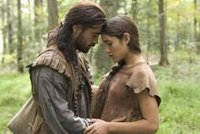
So while Blade Runner has hardly suffered in the public and critical eye (the film is now heralded as a masterpiece of science fiction and of cinema, with numerous books written about its influence and workings as a text), it needs to be included on any list such as this because of how Scott’s film was rescued, even with merely two straightforward but profound changes, and how it brought the possibility of a lost vision into the popular consciousness.

THE NEW WORLD

I’m bending the rules here, as this isn’t really a lost cut. Terrence Malick had full control of the cut he released to theatres of his sublime take on the Pocahontas story, but his producer Sarah Green has promised that a 3 hour-plus version is waiting in the wings for a DVD release that is even more Malickian than the meditative film we have already seen. The New World has been fluid in its incarnations from the start, with Malick releasing a 150-minute cut in limited release, withdrawing it, and issuing a 135-minute version for wide release. Those lucky enough to see the original version say that it was surprisingly different, altering the motivations of principal characters. Whether this version will ever be seen again, or whether it needs to be if the 3 hour cut comes out, is unknown at this point, but a different perspective on this tantalising film, which is developing quite a cult following after its anaemic release a year ago, will be most welcome. And if it succeeds, perhaps it will inspire Malick to revisit The Thin Red Line after all. 

For a comparison of the two theatrical cuts, check out the entry at The House Next Door.

Blood Diamond

Political sensitivity and Hollywood convention have never had the easiest working relationship. Before a discussion of a political film can get into the sophistication and balance of its examination, a script has to be equivocal and nuanced, subtle and measured. The narrative tropes of the Hollywood thriller - the love interest, revenge and catharsis, or extreme danger - often lumber a delicate political idea with excess baggage.

Blood Diamond is such a film. Although an exhilarating and quite accomplished thriller (if not a particularly memorable one), Edward Zwick’s latest weighs itself down with disjointed banter and misplaced emphases. Set in civil war-stricken Sierra Leone in 1999, the film’s harrowing opening sequence sees fisherman Solomon Vandy’s (Djimon Hounsou) teenage son abducted by rebels to be transformed into a machine-gun wielding soldier of the cause. Vandy is spared to work in the diamond fields, where he finds a sizable, priceless diamond and hides it. After the government raids the operation, he crosses paths with Leonardo DiCaprio’s Danny Archer, a former Zimbabwean soldier turned mercenary and diamond hunter. Archer learns of Solomon’s secret and begs him for the location; in return he will help Solomon find his family.

Blood Diamond certainly scores points in muddying its white lead’s ethics, far moreso than those of Tom Cruise in Zwick’s last effort, The Last Samurai. Archer is ruthless and selfish, and for most of the running time we are unsure of whether he cares a thing for Solomon and his plight. However, it’s still a shame that a commercial American film about Africa needs a white window into the story. Sure, DiCaprio’s character is African himself, but his arc reveals little of the social and economic situations plaguing African nations, whereas Hounsou’s Solomon is in the thick of it, and could speak volumes about the issue if he were placed at centre stage. Instead, Solomon is occasionally told to wait while Archer discusses something with journalist Maddy (Jennifer Connelly) or his boss (Arnold Vosloo), exposing an unsettling disparity. And while Zwick’s compassion for those citizens blighted by the conflict diamond trade is clear – this is far more conscientious a script than it could otherwise have been, and Solomon is hardly inconsequential – he still makes unfortunate concessions to middle-of-the-road Western perceptions about Africa. For instance, we are forced to endure Connelly get out of trouble with angry forest-dwelling locals by sweet-talking them into some photos, with one commenting to his men that she reminds him of her wife. Please…

There are several such occasions that draw us away from the sincerity of the topic, veering the film away from Constant Gardener territory into somewhere more dismaying. With this and The Last Samurai, Zwick is developing a trend for morally troubled but otherwise heroic white guys doing great things for a distant people, whereas in Fernando Meirelles’s film the very point was the effect that Western dominance and exploitation was having on Africa. Blood Diamond is less probing than that, briefly featuring the London diamond buyers at the end but refusing to inject any shades of grey or explore the complexities of their end of the deal. Zwick's film certainly works as a potential trigger for audiences to consider these issues, but doesn’t take us much further than that. And strong performances by Hounsou and DiCaprio (sporting a quality accent) and intense action sequences certainly make that trigger more likely to fire in some viewers. It’s worth a shot.

Saturday, January 13, 2007

Happy Feet

The two trailers I saw for Happy Feet did not promise good things. The first just featured a load of tap dancing penguins – it didn’t tease me greatly. The second was remarkable in its lack of decent lines or an appealing premise. The notion of a penguin who can’t sing but can tap dance seemed not pleasantly ludicrous, but inanely ludicrous and a shameless excuse for lots of Disney-friendly songs.

Of course, Happy Feet isn’t a Disney or Dreamworks production, so I should have had more faith. It so happens that the premise yields a disarmingly engaging and unpredictable plot, the songs are few and inoffensive, and the humour is of a kind that can’t be easily pillaged for a soundbite. To cap it off, George Miller’s return to directing for the first time since Babe: Pig in the City in 1998 is visually wondrous for both its vistas and its propulsive action. It’s especially impressive given that this is Miller’s first foray into animation and Sydney studio Animal Logic’s first feature length animation. Happy Feet is a dazzlingly beautiful film, its Antarctica a fully-rendered environment that portrays the requisite sense of vastness. A scene where principal character Mumble (Elijah Wood) dives from an enormous cliff is gobsmacking, vertigo-inducing, and utterly thrilling. Our senses are forced to experience space again and again, the camera following the characters around as other birds and killer whales throw them about so the audience shares their disorientation and panic. Although not an animation expert, I’d wager that Happy Feet constitutes a landmark in how animated sequences are constructed.

But this is more than a show reel. The characters are appealing, with Mumble staggeringly cute as a baby in appearance and voice and engaging as an Elijah Wood-voiced ‘teen’. Robin Williams is fun as prophet Lovelace but hilarious as Ramon, a Spanish-sounding adelie penguin whose dialogue is often incomprehensible but hilarious in cadence (I want to get the DVD just to read the subtitles for his scenes). I’m curious about the choice to give the emperor penguins American accents and the adelies Spanish ones, and I can’t decide whether it’s harmless or crass (the grand, tallest species with the beautiful voices being American is somewhat off-putting). Sadly though, the supporting cast is otherwise dull, with Hugh Jackman, Nicole Kidman, Brittany Murphy, and Hugo Weaving wasted in one-note roles that lack the colour and wit of a Pixar cast.

But Mumble and Williams sustain the film, as does the plot, unexpectedly veering into environmentalist areas that in retrospect make complete sense. The tap dancing gimmick actually facilitates a subtext, sans soapbox, that will get kids thinking about nature and the environment without boring them, and it’s a tremendous achievement by Miller. And the film is consistently exciting as the penguins discover the source of their woes, encountering killer whales and icebreakers in bravura sequences.

The only downside of Happy Feet is the lack of an appealing supporting cast, but that’s challenging when foregrounding a colony of penguins, especially since Miller strives for physical realism. Superficial differentiation and eccentric behaviours are therefore limited, but Miller does well with the restraints of his own premise. Happy Feet is quite an achievement, and establishes Animal Logic, not Dreamworks or Fox, as the potential Pixar competitor. 

Casino Royale

I’ve never been a James Bond fan. Like Star Wars, it’s one of those franchises that eluded me in my formative years, and unlike that cornerstone I was decidedly unimpressed when I finally came across it. Even now I fail to grasp what so many find so entertaining about Bond, chauvinistic piece of two-dimensional cardboard that he is, especially since the majority of his movies are over-the-top and terrible. And spare me the whole ‘so bad it’s good’ argument. That’s fine for direct-to-video dross, but not sufficient for one of the biggest franchises in cinema history.

Thankfully, Casino Royale fixes so many of the problems I had with Bond, and much has been made of this. No more outlandish gadgets and horrendous puns, and the script insists on Bond being recognisably human. He’s still a ridiculously talented and unflappable bugger, but this is used – at last – to point out the emotional restraints he has placed on himself as a result. The script gets the ball rolling and Daniel Craig kicks it all the way to Sweden. He’s utterly magnetic in the role, ensuring both that we believe Bond has been in the military and that we can see the results. The vacancy in his eyes seals the deal. By taking Bond to such a remote extreme, Craig actually makes him more relatable by demonstrating what he is lacking.

He’s well supported by Eva Green, Mads Mikkelsen and some spectacular action sequences. The opening chase scene is gripping in its sheer audacity, taking us through car windows, up cranes, and into embassies, and it’s matched by a race-against-time on an airstrip, a stunning car flip, and other extravagances. While enormous, these sequences are somewhat credible and taken seriously, unlike the invisible car and other pun-ridden pursuits of the Brosnan films (although Goldeneye was good, I’ll admit). More remarkably, the action is supported by some poignant character moments, particularly when Bond comforts the shaken Vesper (Green) after he kills two men in front of her. Green herself enjoys a Bond girl role that barely resembles its predecessors. Gone are the condescending and useless portrayals of women of films past; Vesper can see straight through Bond’s shit, but is intrigued by what drives him all the same.

Sadly, the film doesn’t understand economy, taking far too long to tell its story and drawing out its climax painfully, making the idea of rewatching the film seem arduous. The poker game mid-section is inherently problematic, and while the script tries to enliven it by placing action in the game breaks, it’s still a hefty chunk to wade through. Plus, the build-up to the climax is so transparently doomed that the following twenty minutes seem oddly tacked on and a little dreary. And on a side note, why did they bother to cast Jeffrey Wright in such a small, unremarkable role? I hope they’re preparing to use him more substantially in the sequels, which in another break from tradition may well continue the story of this film. Like fellow rebooter Batman Begins, Casino Royale has cumbersome parts but still does a tremendous job of liberating the Bond paradigm from tiresome excess and reactionary worldviews.

Night at the Museum

In the interests of accuracy, let me state that I would not have gone to see this film were it not a social occasion in a small town where we’d either seen or were disinterested in everything else on offer. Director Shawn Levy’s work to date has appeared to be singularly uninspiring so I haven’t bothered to sample it: The Pink Panther and Cheaper by the Dozen (1 and 2) screamed ‘derivative studio comedy!’ Having seen Night at the Museum, I can confirm that my suspicions about Levy were correct: he has virtually nothing to offer visually, comically, or actionly (yes, I made that up, but I’m sure he would too).

What’s most agonising about Night at the Museum is that it takes the premise for an potentially exciting, funny family film and utterly fails to capitalise on it. Instead exploiting the inevitable but endearing and clever ramifications of a concept ala Toy Story, we have Ben Stiller’s vendetta against a small monkey that keeps urinating on him. Honestly, what is America’s obsession with monkeys? Great animals, don’t get me wrong, but their comedic value should wear out pretty quickly. But no, half of YouTube seems to be chimps eating their own shit. Other jokes long since done to death fill the entire running time. How does a studio comedy lead react to a horde of bloodthirsty huns? He talks Attila into recalling a troubled childhood that has made him lash out. Amateur therapy on burly violent types followed by cathartic tears is another old standby that this school of comedy never tires of. Talking of convention, surprise, surprise, Stiller plays a divorcee whose son is becoming distant. Cue the ultimate bonding opportunity, some valuable lessons, etc etc.

Stiller himself is cruising, big time. He’s a great talent who chooses to regularly slum in dross like this, Along Came Polly (“from the co-writer of Meet the Parents”!), and Starsky and Hutch, punctuated occasionally by some branching out in Arrested Development and Meet the Parents. It’s a shame how he and Owen Wilson continue to peddle the same persona from film to film given that they are capable of much more.

Worse still, he has a strong supporting cast completely wasted in a painful climax about a mystical amulet that not only brings the museum exhibits to life, but inexplicably makes the elderly security guards feel young again at night. Dick Van Dyke and Mickey Rooney get nothing to do but give it a go. Plus, what the hell is Robin Williams doing here?! His dull character and lines make this the most pointless utilising of Williams’ talent in a long time. Likewise, Ricky Gervais and Steve Coogan seem a little bewildered in their cameo roles (actually, when Gervais is on screen, it seems to be a different film, his deadpan style amusingly at odds with the surrounding sledgehammers), although Coogan and Wilson (who has his own cameo as a cowboy with clichés to spare) get the film’s single laugh-out-loud gag, a witty mining of the premise that Pixar would be proud to use. It’s a shame that it’s almost ruined by a Brokeback Mountain joke that would have been lame even when it was timely.

There’s precious little to recommend this film, so put it from your mind, except to be depressed that it has been a monster holiday hit in the US. Sigh…. 

Flags of our Fathers

Clint Eastwood’s Flags of our Fathers is largely noteworthy in terms of the project it ultimately became a part of: Eastwood’s Iwo Jima duology, also comprising Letters from Iwo Jima, a separate film telling the same events from the Japanese perspective. I have yet to see the companion film, but hopefully it is more satisfying and purposeful than Flags, which in its own right struggles to justify its existence.

It’s a shame to imply that an entire subgenre has to be shut down for a while, especially given how vitally important it is for us to continue to remember and consider the events depicted, but World War II cinema is in danger of repeating itself to the point of numbness. After the 1998 defining one-two punch of Saving Private Ryan, with its visceral immersion, and the existential contemplation of war’s nature in The Thin Red Line, new approaches must be found to honouring the fallen on film, as collectively Spielberg and Malick’s pictures form a definitive exploration of the topic for our generation. Flags of our Fathers’s sensibility stands somewhere between the two, although its battle scenes are sadly cut from the same cloth as Private Ryan. Partly due to the precedent that Spielberg set, they cannot compare in intensity and are redundant due to the similarities. Conversely, Eastwood quietly examines the toll of war, but unlike Malick, keeps his analysis more grounded and resists the big questions.

This is where he could have found a purpose for Flags, but we are kept at arm’s length. The narrative alternates between the battle for Iwo Jima and three of its soldiers enlisted to campaign for financial support for the war back home. They were among those in the iconic flag-raising photo that inspired the book by James Bradley and this adaptation, which reveal the shameless commercialisation of the war and its soldiers for the sake of perpetuating it. We follow John Bradley (Ryan Phillippe), Rene Gagnon (Jesse Bradford), and Ira Hayes (Adam Beach) through one publicity stunt after another, and each have varying degrees of resistance to the process. Sadly, Beach’s amounts to a lot of unearned crying, Phillippe is too stoic and betrays insufficient feeling to evoke our sympathy, and Bradford, the most interesting of the three, does well with a different performance pitch for a war film, but he isn’t enough to save the story.

Flags is tragically restrained, almost stately, and while it is essential that we keep our soldiers and their stories in the public memory, I hope that we can do better than this. Innovation is not just in the interest of the viewers, because by forming new approaches and perspectives on this material, we do further justice to the immense psychological and ideological complexity of war and the struggles of its fighters, or at least the most of the little we ever can. Quentin Tarantino may eventually film his World War II project Inglorious Bastards, and while his cool, pop sensibilities run the risk of making war more shamefully entertaining than the movie biz has already made it, his idiosyncrasies may be wedded to a sophistication and respect, which together will hopefully illuminate a new facet of the miasma of conflict. This should be the goal of any war film after so much has been achieved in the genre, and not just for we film buffs. 

Wednesday, December 13, 2006

Lost Cuts, Part One

One facet of film fandom that I have a huge, irreconcilable crush on is the idea of lost versions of films we know, be they well regarded films that have lost key footage on the cutting room floor, or, in particular, panned films that are only maligned due to studio interference that left their true incarnation lost to either the mists of time or perhaps to a European vault, waiting to be discovered by an enterprising Hollywood film fan. We’ve been lucky enough to bear witness to many ‘lost cuts’ over the years, from the prototypical director’s cut of Blade Runner to the release last month of Superman II: The Richard Donner Cut. This enthusiasm does, of course, leave out the horribly cynical DVD ‘special editions’ of films, where a few minutes of pointlessness or crudity “Not Seen in Theatres!” is released and proclaimed as a grand new version. No, this is about grassroots, underdog versions of films that have fought their way into the film fan and then public consciousness, whose potential release the studio must be relentlessly harangued over. It’s about the triumph of art over commerce, and when the intended cut or prized footage is unveiled, film fans rejoice.

THE THIEF AND THE COBBLER

One that has come to my attention recently, and which inspired this article, is Richard Williams’s The Thief and the Cobbler. ‘Never heard of it’, you say, and rightly so. Until its bastardised and incomplete release in 1995 after thirty YEARS of work, the film was only a much-admired legend in the animation industry, and given its disdainfully minor release in cinemas and on video, it has largely remained that way. What appears to be a trivial animation cash-in either entitled The Thief and the Cobbler, The Princess and the Cobbler, or Arabian Knight (depending on where you live), is actually the residue from a labour of love that endeavoured to be the pinnacle of hand-drawn animation, a triumph of artistic process where financial returns were moot. The Thief and the Cobbler could have been the defining achievement in hand-drawn animation, but now it lurks as a mythical could-have-been among animation enthusiasts and a big nothing to everyone else. But there is still a chance that The Thief could emerge as it was once meant to be seen.

I came across the project earlier this year in the signature of an Internet forum posting. A user posting in the Blade Runner thread on the Home Theatre Forum included a banner encouraging fan efforts to restore The Thief and the Cobbler. Intrigued, I clicked the link and found Eddie Bowers' tremendous site devoted to awareness of Richard Williams’s grand project. Despite the secrecy surrounding this film, you have indeed encountered this man’s work: he was animation director for Who Framed Roger Rabbit?, a job he secured on the basis of the animation he had managed to complete on Thief thus far, footage which so dazzled director Robert Zemeckis and Industrial Light and Magic that Williams was an essential hire.
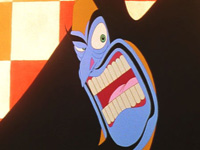
Even in 1988, Thief was the subject of excitable whispers. In dribs and drabs since the 1960s, Williams had produced animation of such loving detail that it put anything else actually released to theatres to shame. But Williams was not interested in a commercially lucrative end result. This was animation for animation’s sake, an attempt to break every known rule of what the medium could achieve. Although it certainly had a plot (inspired by Arabian folk tales) rather than comprising a melange of sketchy indulgences, the lack of traditional action and, most tellingly, musical numbers, made Thief a dicey project for any studio.

Williams’s success with Roger Rabbit finally secured him the funding he needed to hire a full staff and work on the film full-time, and beginning in 1990 the goal was to release the finished Thief and the Cobbler in 18 months. But when Williams screened a rough cut to the studio, they were shocked by a film they perceived to have no commercial viability. Since Disney’s resurgence in 1989 with The Little Mermaid, songs were considered central to any animated film’s wide appeal. Thief had none, and to boot, its main character maintained a Chaplineseque silence throughout. Panicked, the studio allowed The Completion Bond Company to take over, who fired Williams and moved the production from Britain to Hollywood under the direction of Saturday morning cartoon worker Fred Calvert. Williams still had 15 minutes to complete, and Calvert not only finished these utilising cheap TV-quality animation outsourced from Korea, he jettisoned numerous painstaking Williams sequences for the sake of musical numbers and other more commercially accessible features.

The result, released internationally in 1994 as The Princess and the Cobbler, was a shocking degradation of Williams’ vision. Ironically, it appears to be rip off Disney’s Aladdin from two years previously, but many in the know accuse Aladdin of cribbing from the circulating Thief workprint. Buried within Princess are preserved sequences of stunningly intricate beauty, but the film had been unutterably compromised. The following year, this version was released with yet more changes and much more dialogue than was ever intended as Arabian Knight.

This was the last incarnation ever seen of The Thief and the Cobbler, and since then it has been the source of much pining among those savvy with animation history, especially since the workprint that Williams unspooled for executives before being removed from the film has been circulating among animation insiders ever since. Roy Disney has made numerous efforts to restore the film with Williams’ active involvement, but the goal has been stymied every time by a lack of financial and creative investment.
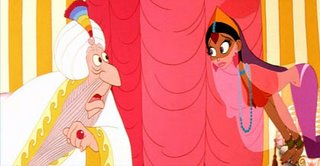
The film has made news again this year due to a Miramax DVD release, which once again does nothing for Williams’ version, instead releasing Arabian Knight as The Thief and the Cobbler as was done for home video in the mid 90s. But more importantly, one industrious filmmaker fan, Garrett Gilchrist, has created the best possible version from unearthed superior copies of the workprint painstakingly interspersed and superimposed with surviving Williams footage of far better quality from the DVDs of Princess and the Cobbler and Arabian Knight, storyboards, and stills secured from original crew members.

I hope to see this new version very soon, and Gilchrist and other supporters hope that this Recobbled Cut will prove to Disney that a market is out there for the finished version of this landmark film, which industry professionals are virtually unanimous in hailing as the greatest technical achievement in animation history. How unbelievably excited this prospect is, especially since it isn’t inconceivable that with the right money, no interference, and Williams’ involvement (no doubt guaranteed by the former two criteria), The Thief and the Cobbler could finally be finished. Although animation junkies like myself are particularly excited by this perhaps foolhardy hope, it could be a landmark in film history in general for a major, influential project to finally be finished.

TWIN PEAKS: FIRE WALK WITH ME

Although ostensibly only of interest to fans of Twin Peaks, the scenes deleted from David Lynch’s 1992 film are among the most differentiated from final release that you could find. For the resurrection of Twin Peaks for the big screen, Lynch gathered nearly every regular from the series to shoot some scenes, but perhaps instigated by a disastrous screening at Cannes, ultimately decided to shear the sequences that did not contribute to the central narrative of Laura Palmer’s final week. Given this rationale, many have objected to some of what he elected to leave in, including David Bowie’s bizarre interlude as a returning FBI agent never mentioned in the series. But Fire Walk with Me’s strange coherency in the face of an occasionally episodic structure makes these omissions less pointed. For now, the prospect of seeing more footage with a huge array of beloved characters from the show – footage that has literally never been seen publicly outside of the Cannes screening, if even then – is tantalising enough. Lynch has said that there is around an hour of deleted scenes that he would like to unveil, but the shooting script reveals even more.

What has stood in the way is money, as usual. Lynch has insisted that if they are to be released – and he does seem to want them to be – these scenes must be restored, colour timed, scored and otherwise completed (this is where uncertainty emerges, given that a longer cut was apparently shown at Cannes – surely some of the scenes were finished for that). The cost is substantial, and for nearly 7 years New Line Cinema and then French copyright owner MK2 have tried to make a DVD release featuring the extra footage financially viable. Only whispers and potentialities have been uttered in the last couple of years, with Lynch and others hinting that talks have taken place and that it will one day happen. Campaigns have been undertaken, so now we can just sit back and wait, although given the palaver, I am reminded of Joss Whedon’s concern regarding his campaign to save Firefly: when does resuscitation become necrophilia?

Some of the more tantalising unseen bits include (thanks to the stalwart campaigners at FWWM Fight):

- Sheriff Harry Truman singing to Josie Packard
- Doc Hayward performing magic tricks for Laura and Donna
- Philip Jeffries (David Bowie) materialising in Buenos Aires
- Harry, Lucy, Andy, and Hawk at the Sheriff’s station
- Laura visiting Dr. Jacoby
- Big Ed watching Nadine skin a deer
- Cooper talking with Sam Stanley (Kiefer Sutherland) following Chet Desmond’s disappearance
- The Log Lady howling at the moon (!)
- Laura and Sarah Palmer share a cigarette
- Philip Jeffries in the Red Room (?)
- Big Ed and Norma enjoy a stolen evening in Ed’s truck
- Scenes between BOB and the Man from Another Place
- And, MOST excitingly, a few scenes taking place after the series involving Copper and Annie Blackburne (Heather Graham). While the script reveals that these scenes reveal nothing particularly useful regarding that tragic cliffhanger, they will be great to see. And perhaps Lynch, a famous on-set innovator, shot some additional, more telling material.

Other actors who shot scenes include Richard Beymer (Ben Horne, sorely missed from the film), David Patrick Kelly (Jerry Horne), and Don S. Davis (Major Briggs).

[Deleted scene images courtesy of FWWM Fight. Please check out and sign their petition]

THE THIN RED LINE

Terrence Malick’s 1998 film is a hypnotic and contemplative counterpoint to Saving Private Ryan from the same year, reaching beyond war to question the nature and value of human life and free will. But Malick’s early scripts for the film suggested a more conventional and brusque take on James Jones’s novel, and this material may indeed have been shot. Although nearly three hours long in its finished form, Malick allegedly created an initial cut of over six hours before finding his desired result within: a meditative, often silent perspective on World War II whose fascination with nature seems to divorce it from historical context entirely.

What was in those three hours? The script reveals that Adrien Brody’s Fife was one of the principal characters and the actor was initially promoted as such, appearing on the cover of Vanity Fair in the lead-up to release, yet he barely speaks in the final version. Brody had clearly shot this material, as he has spoken of discovering only at an early screening that his substantial role had been whittled down to virtually nothing (similarly, I don't recall the accompanying image appearing anywhere in the final cut). The elimination of Brody’s character and the shift of focus on to Jim Caviezel’s disillusioned Witt indicate that an entire storyline vanished in post-production.
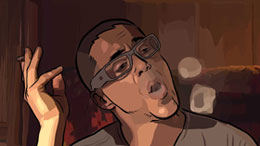
More astonishingly, Malick had even more big-name actors working on the film than the final cut exhibits. Billy Bob Thornton, Martin Sheen, Viggo Mortensen, Bill Pullman, Mickey Rourke, Lukas Haas, and Jared Leto – a stellar lineup in itself for any movie – were all jettisoned from the film. Perhaps their roles were small, but where on earth could they have fit in the narrative? I’d wager that the odd lurch into the final battle sequence after a relatively smooth progression was originally home to a far larger transitional storyline, which perhaps featured some of the missing cast members. Thornton even recorded a narration for the entire film before Malick opted for multiple voiceovers from a number of other characters.

I can’t help but be fascinated by what other version of Malick’s film could exist, although I suspect that with a film as delicate and masterful as this, releasing deleted footage or – god forbid – creating an alternate version would be nothing but destructive, distracting us from the finely crafted jewel we now have. Plus, this is not a product of studio interference or pressure – Malick himself made the cuts. But given the beauty and precision of every scene in Malick’s back catalogue, how glorious might it be to see these scenes in isolation, just once, especially the entire Adrien Brody storyline given how fine an actor he has since proven to be. However, this will never happen, as neither Fox nor Malick have ever shown the slightest inclination to release this footage… and I doubt I would want them to. But we can wonder. 

I'll post some musings on other lost or rediscovered cuts soon, including Kingdom of Heaven, Exorcist: The Beginning, Superman II, Heaven's Gate, The Magnificent Ambersons, and, of course, Blade Runner.

Monday, December 04, 2006

Links of choice

- David Simon in a tremendous Slate interview on The Wire, including the thematic plans for season five. I just hope McNulty is back full-time.

- IGN's Top 50 Lost Loose Ends

- Bookslut interviews Marjane Satrapi

- Slate examines the revelatory writer's room recordings from Battlestar Galactica

- the Library of America does its bit for SF recognition by devoting its next volume to Philip K. Dick.

The Prestige

It’s a relief that unlike Bryan Singer, Christopher Nolan was able to shoot a pet project between mammoth superhero instalments. It’s a shame to me that as good as Singer’s comic-book adaptations have been, he’s largely lost touch with his roots in smaller-scale drama, and I was concerned that Nolan may become similarly lost, despite my great love for Batman Begins. Thankfully we have The Prestige, a film version of Christopher Priest’s Victorian novel that he’s been developing for years, and it occupies an intriguing middle ground between the intelligent commercialism of Begins and the indie grit of Memento.

Aspiring 19th century London stage magicians Robert Angier (Hugh Jackman) and Alfred Borden (Christian Bale) are cautious friends with differing goals. Angier wants to be a great showman, but Borden, less the performer and more the craftsman, wants to achieve sleights-of-hand never seen by audiences, to push the limits of stage magic. When an accident precipitated by Borden kills Angier’s wife, they become professional and personal rivals, which is only exacerbated by Borden’s immense success with the inexplicable trick “The Transported Man”, whose secret Angier becomes obsessed with discovering.

The script, by Nolan and his brother Jonathan, is a tremendous example of transposing a text into a new medium (nice coincidence, that ;D), creating a purposeful new vision of existing material. Priest’s novel is largely told through the two protagonists' diaries, the lengthy extracts of which effectively build up our resentment against the other character before their own entry swings the pendulum back. Nolan achieves a similar sense of equilibrium via disorientation using techniques best suited to cinema, playing again with linearity as he did in Memento but instead mixing up the chronology rather than outright reversing it. He does so in order to parallel the three acts of the film with those of a magic trick, as outlined in voiceover by Michael Caine’s trick designer Cutter at the start, so that the answers to this quite beguiling mystery are provided in the final third even though they are strewn throughout Borden and Angier’s respective journeys. The Prestige is further proof that Nolan has some of the best instincts in the business, staying faithful to a novel while still delivering a film with his own stamp on it.

This is a less psychologically probing film than Memento and Insomnia, and some have dismissed it as a well-done genre indulgence.I'll leave aside my own criticisms of those who criticise genre and just say that the film works spectacularly on both levels. This is an entertainment that never panders, enrapturing us with its enjoyable headspinners while never remaining emotionally distant. While the film lacks the intimacy of the aforementioned two Nolan efforts, its character work is clearly sufficient because we continually sympathise with two almost psychotically obsessed men. The dialogue is occasionally clunky and expository, but the performances make up for it. Jackman is both charismatic and unnervingly determined as Angier and funny as his foppish hired double, but I expect that The Fountain will be the film that reveals his true powers to us.

Bale is characteristically excellent, selling Borden’s awkwardness and selfishness while still arousing our support, particularly through his love for his daughter. His odd, tragic relationship with his wife is a high point, even if its resolution doesn’t feel earned. Caine is great as always, and he and Bale manage to be sufficiently different from their recent pairing as Bruce Wayne and Alfred that we're never reminded of it. Scarlett Johansson is adequate in a fairly thankless role that I’m surprised she took; perhaps working with Nolan was the attraction. And David Bowie makes a very welcome return to movies with an enigmatic and otherworldly performance that contributes to the film’s inexorable sense that what we are witnessing is somehow against nature, although we will not discover how until the conclusion.

What proportion of the audience guesses the twist in advance will be fun to discover. Having read the book, it was sadly spoiled for me, but this didn’t detract from the film. In fact, a second viewing will still be very rewarding just to observe how Nolan built it into the film, especially since I forgot the second twist, the catalyst for the film’s haunting final image. Don’t let anyone ruin this movie for you, as its glorious construction needs to be admired with unspoiled eyes. However,  it’s not just a puzzle to solve. The Prestige is also an emotionally rousing tale, delving into the nature of obsession and what gives a life purpose. Once again, I’m thankful for filmmakers like Nolan, who work within the system to create meaningful work to savour. 

Sunday, December 03, 2006

A Scanner Darkly


Richard Linklater’s A Scanner Darkly took almost two years to complete and finally arrived in American cinemas in July but was greeted with a collective shrug. Finally released in Australia this week, I was eager to discover whether the problem with Scanner was that it failed to work as a cohesive film in its own right. As a Philip K. Dick fan, I was also ecstatic at the prospect of seeing the very first faithful adaptation of his work for the screen. Even Blade Runner uses Do Androids Dream of Electric Sheep? as inspiration rather than source text, resulting in a largely distinctive text where Dick’s themes and ideas are glimpsed rather than fully discerned. The freedom of a small budget has allowed Richard Linklater to adapt A Scanner Darkly close to the original bone, especially since the novel features little SF imagery. However, the rotoscoping of animation on top of the live-action makes this seem as otherworldly as the best of Dick.

Seven years in the future, a new drug called Substance D has hit it big, with over 20% of the population addicted. Bob Arctor (Keanu Reeves) is one, living in a ramshackle house with two other junkies: scheming knowledge-sponge Jim Barris (Robert Downey, Jr.) and exasperated Ernie Luckman (Woody Harrelson). Arctor’s girlfriend, Donna (Winona Ryder), is also their dealer, but Bob is actually a cop working undercover, who remains unseen by his police colleagues by wearing a regulation scramble suit, which replaces his own visage with a constantly shimmering display of thousands of others. But due to taking Substance D, Arctor is starting to lose track of who he is inside the house and out of it, especially when his unknowing colleagues order him to use bugs to essentially spy on himself in order to discover the source of Substance D.

Like the novel, A Scanner Darkly’s storyline is difficult to discern, especially in terms of how Arctor’s household fits into the grander plan regarding Substance D. But this doesn’t matter too much, as the film’s Dick-ian ambience of intense paranoia is enthralling enough in its surrealism to usher you through. This is accomplished largely through the rotoscoped animation, whose shimmering outlines and facades that resemble reality while leeched of detail heighten our perception of this world as being determined by the drug experience or even a product of it. The work that went into this was painstaking: 18 months of animation following a 23 day live-action shoot, but some have questioned its necessity, especially since the unreal, science fiction images are remarkably few. But I can’t imagine the live-action version of this film being anywhere near as infectious and insidious. With its vague boundaries, the animation seems to creep into your brain and scratch at its surface, fulfilling Dick’s ongoing theme of the invasion and compromise of the individual by external forces. Without the animation and its archetypal abilities, Scanner would be too distanced from the viewer; our understanding of the character’s plight actually comes in part from these unnerving cartoons.

The actors contribute a great deal to this too though. Reeves gives his loosest, most emotive performance in a long time, nailing the crucial role of Arctor. Downey is typically tremendous as the demented Barris, source of much of the film’s humour, often very black – this is a very funny film, both in the dialogue and the interaction between Downey, Harrelson, and Rory Cochrane as the delusional Charles Freck. Harrelson doesn’t get a great deal to do, but Ryder is pretty good, reminding us of her glory days – hopefully she can pull it together and get her career back on track. And on that note, let me say how fucking awesome it is that Downey is back in the fast lane. He’s one of the absolute best actors around – hell, I even want to buy his season of Ally McBeal on DVD because he was so damn entertaining on that show. Even in a quick shoot like A Scanner Darkly, Downey proves his immense value- kudos that man, and kudos to Linklater, as he’s perfect for Barris.

This is one of the most adventurous films in a long time, experimenting with a bold new filmmaking style, offering science fiction but with few of the familiar tropes, and featuring an often-impenetrable plot, all in the name of telling a very personal story by Philip K. Dick about the devastation of drug addiction. Whether it receives a Blade Runner-esque critical reappraisal can’t be predicted, but this is a lot better than it’s been made out to be. Check it out.

Saturday, December 02, 2006

Preacher coming to HBO

Okay, there's been a trifle too much dicking about the marsh lately and not nearly enough blogging. That's about to change. For one thing, I'm going to cease restricting myself to lengthy reviews and make this the more encompassing blog I originally planned it to be, with news stories of note, links to great articles, and so forth.

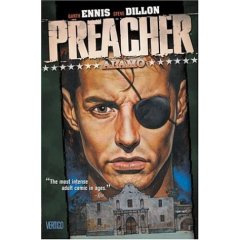
The most surprising news of the last week was the announcement that HBO are developing an ongoing series based on Garth Ennis and Steve Dillon's Preacher comic series for DC/Vertigo, which wrapped in 2000 after 66 issues telling of former priest Jesse Custer's mission to literally find God, who has abandoned Heaven and whom Jesse believes must be taken to task for his wrongdoing. Jesse has been possessed by Genesis, spawn of an angel and a demon, which allows him to command anyone to do anything, and he employs The Word on an intermittent road trip with fugitive girlfriend Tulip and Irish vampire Cassidy.

A concept like that is controversial enough in itself, but Ennis and Dillon are famed for their uncompromising violence and depraved humour, which has no equal, at least in mainstream comics. I've read the first two volumes of the series, and it's among the most confronting things I've read. I honestly don't know what to make of it, but I suspect that the grotesque and decidedly unsubtle veneer is a sleight of hand for Ennis' more sophisticated commentary about organised religion. Preacher has certainly attracted enough praise from various circles to support this, but until I read the whole thing I'll have to remain uncertain while being guiltily entertained by the lengths Ennis take things to. And they are long…

A movie adaptation was in the works for a while, but fan consensus was that an HBO series was the only way to faithfully translate the story, given its content. Lo and behold, here it is, and I'm genuinely shocked - I expected the underwhelming critical response to Carnivale and its subsequent cancellation would have put HBO off the supernatural for quite a while, and Carnivale was much more allusive than Preacher; if critics didn't respond to that, I can't imagine the response that Preacher will receive, especially given the content. If even a few of Ennis's setpieces are preserved for the show, they will rank among the most horrendous things ever broadcast on American television - I'm amazed even Vertigo allowed some of it through. HBO has picked one hell of an incendiary property here, although this does suit their stated desire for originality - "it's not TV, it's HBO". But Preacher could be bold in a far less beneficial sense.

Plus, they haven't hired a promising team. HBO have prided themselves on recruiting visionary creators with proven artistic track records - even The Wire's East Coast creator David Simon had the Emmy-winning and hugely praised mini-series The Corner behind him. The Preacher pilot will be scripted by Mark Steven Johnson (writer-director of the drubbed Daredevil and the potentially woeful Ghost Rider) and directed by Howard Deutch (director of comedies like Pretty in Pink and the Grumpy Old Men films, also written by Johnson). These names are not remotely prestigious or evidently appropriate for a show like Preacher. But then, HBO has never adapted an existing property for an ongoing series before (although this is shocking in itself), so I suppose the previous rules don't apply: vision is not a prime requirement since the story is already out there. But I'm still surprised that HBO went to these guys for one of their dramas, regardless of its origins. Perhaps they'll surprise us. We won't know until it's on the air.

But this development reminds me of my dilemma about comic adaptations, particularly of long-form narrative comics like Preacher and The Sandman. A movie will be too short and could only hope to capture the original's spirit, but the freedom of an ongoing TV show could be similarly redundant: we already have this story in episodic form, and to hew too close to the original telling begs the question of 'why do it at all?' Religiously faithful translations almost always seem superfluous since they have failed to justify themselves as separate texts and often because they have not modified the book to suit a visual medium. The turgid, overlong Harry Potter and the Chamber of Secrets is a recent example of this, which then gave way to the tighter, more cinematic Prisoner of Azkaban. Johnson does not appear to have heeded this though. From Sci-Fi Wire:

"I gave [HBO] the comics, and I said, 'Every issue is an hour.' And it's exactly the book. ... I had my meeting yesterday, and [Preacher creator] Garth Ennis is on the phone, and we're all in the room, and Garth is like, 'You don't have to be so beholden to the comic.' And I'm like, 'No, no, no. It's got to be like the comic.' So that's what's so brilliant about it."

Granted, it must be thrilling to be able to preserve a cherished text on screen, but when the author tells you to be less adherent to it, you should listen. Comics and television share an episodic format, so to merely film the existing episodes becomes redundant, especially on a network of HBO’s proven calibre and creative flexibility – they would let you do something new. But they are very different mediums anyway, and to merely film the comics will likely result in an undead facsimile rather than a worthy alternate text; the effect will be similar to a direct translation of prose without the translator modifying the result to create coherency. To transform a text for another medium is not to betray it, but in many cases to be more faithful by recognising what makes it universal and making the necessary changes for the new delivery mechanism, in this case television. The crucial flaw of Johnson’s Daredevil film was that his passion for the material overrode his judgement about what would work in cinema and what wouldn’t – among other things, supervillain posturing is easier to get away with on the page than when an actor has to deliver the lines. Will Johnson’s love of Preacher blind him from doing it the greater service, which is to prove its value by modifying it for the screen rather than exposing it to the accusation that it is merely a comics curiosity that does not belong outside of those pages? First it has to get to series though, so we won’t have to wonder for a while yet.

But this may partly tie into my increasing ambivalence regarding adaptations for film and television, particularly of comics. Since both media are both visual and written, to adapt a graphic novel or a long-form self-contained comic series for the screen potentially belittles them, implying that film can capitalise upon these glorified storyboards and do them better justice. But check out Scott McCloud’s Understanding Comics for a revelatory explanation of why comics are unique, and why film adaptations are even less worth the trouble than those of a prose novel. With an iconic visual text like Watchmen, I’m torn between the tremendous promise for the film version that is Zack Snyder and an inner scream that a movie is completely bloody pointless, not just because of the original’s complexity (most novels cannot be wholly preserved in that sense on film either) but because the story is so carefully constructed as a comic that a film, even an HBO mini-series as many have called for, could only be a strange, parallel-universe monster incarnation of the story. As much as I liked V for Vendetta, this nagging demand of ‘what’s the point?’ arose while watching it and still does. But this is all an essay for another time…

Tuesday, November 14, 2006

Frank Herbert's Dune and Children of Dune

I recently revisited the Sci-Fi Channel’s mini-series Frank Herbert’s Dune for the first time since its release in 2000, both to reappraise this interesting project in its extended DVD version and to precede my first look at the sequel mini-series, Children of Dune. I was both disappointed and pleasantly surprised with what I found.

Adapting Dune as a mini-series was a terrific idea, allowing Herbert’s narrative and themes to be more faithfully captured than both film in general and David Lynch’s 1984 adaptation specifically. I adore Lynch’s work, but his Dune film was hamstrung by length considerations and outside interference and blighted by the unnecessarily twisted sensibility he infused it with. Dune should be provocative, but not freakishly disturbing. John Harrison’s mini-series promised a more dignified and elaborate treatment of the material.

It certainly gets a lot right. The changes wrought by the years that the story spans are much more apparent, bolstered by Alec Newman’s performance as Paul Atreides, who despite some wooden and cheesy moments manages to clearly transform his boyish Paul into the mature leader Muad’Dib. Harrison’s script also captures the political intrigue surrounding the three noble houses more comprehensively than a film ever could, allowing the Fremen’s overthrow of the Harkonnens to feel much more organic. The set and costume design is sumptuous too. You’ll noticed the scattered nature of this praise, which is sadly due to how much the mini-series is unable to accomplish.

Two factors hinder this new Dune, the first being the production values. The dedication of those behind this project cannot be doubted, and their ambition in attempting to tell this story within the budgetary confines of television is laudable. The decision not to film in the desert is also understandable, as such a shoot is taxing enough for a big-budget movie, let alone a TV production. But the setbound outdoor shoots are so jarringly integrated with the matte painting and CGI backgrounds that the mini-series looks painfully cheap. The effects shots themselves are also awkwardly mediocre, being tasked to forge such sights as sandworms and a Guild Navigator on a TV budget circa six years ago. The producers have tried to compensate for the lack of location shooting by deliberately aiming for a theatrical style that allows greater focus on character and story, but sadly, that style is so rough around the edges that it ultimately distracts from those elements.

Which brings us to the next hindrance: writing and acting (two factors, yes, but in this case they’re inextricable). Harrison achieves a lot in his screenplay, but the dialogue is such that the subtlety of Herbert’s story is often either smothered by stilted moments or made too obvious by exposition. He also fails to learn a lesson from the Lynch film, which made the Harkonnens cartoonish and genuinely vile (something Herbert himself specifically objected to), raising the question of how on earth they had become such an influential force in a universe clearly beholden to serious financial and political machinations. While the mini-series lacks the disease-ridden, deviant, grotesque Baron of the film, its own recalls cartoonish supervillains of sci-fi films past. This Baron is so hollow and dull in his powermongering that he sabotages the sincerity of Paul and the Fremen’s struggle, failing to provide a strong ideological opponent. He even ends scenes actually laughing maniacally – Dune is more sophisticated than that. This is no fault of McNiece, who could undoubtedly pull off a more nuanced character if the script allowed it. His nephews, the yawn-inducing, typically amoral Feyd-Rautha and the staggeringly cheesy Rabban, do not help matters.

Other performances, either due to the actors themselves or Harrison’s directorial choices, let the affair down. William Hurt was a big coup for the production, but he gives such a dull performance that he barely registers. P.H. Moriarty’s Gurney Halleck actually seems amateurish, oddly so given how smooth he was in Lock, Stock, and Two Smoking Barrels. Newman sometimes interrupts the gravitas he has accumulated as the older Paul with strangely whiny delivery. Plus, there are numerous cheesy moments that belie the Dune series’ intelligence and depth.

I usually hate the expression “for fans only”, as it usually comes from smug critics unfamiliar with source material who imply that fans will lower their standards if a movie even resembles what they cherish. Still, I couldn’t recommend Frank Herbert’s Dune to anyone who hasn’t read and appreciated the book. The mini-series stands as an interesting curiosity for Dune fans, but is too lacking in other respects for newbies to be able to embrace the glorious strangeness of this universe.

Children of Dune, however, is a quite different matter. Harrison again provides the screenplay - adapting the second and third books in the series into one package – but was unable to direct due to other commitments. He is succeeded by episodic TV director Greg Yaitanes, who has since helmed episodes of Lost. Ironically, despite being new to Dune, Yaitanes provides a far smoother and more cohesive experience, although he is no doubt assisted by the difference that two years can make in visual effects and compositing.

This marks the first time that Herbert’s Dune sequels have been brought to the screen, a risky proposition given how marginalised they are in relation to the original. While they have plenty of fans, the more straightforward and prototypical rite of passage narrative of the first novel may have afforded it greater permeability. The sequels get progressively weirder, and Dune Messiah and Children of Dune are more pessimistic, examining the cyclical nature of revolution and the inevitability of corruption. They also lack a high-concept narrative to pin it all on. I’ve loved those of the sequels I’ve read so far, but can see why many don’t. This adaptation manages to make them more accessible and emotionally engrossing even if they remain somewhat oblique.

The most noticeable improvement to the adaptation process is those production values. While still setbound and even creating entire indoor environments in bluescreen, the integration between set and artificial background is so much stronger. The transition between real and CGI sand is often seamless, even though the lighting confirms that is clearly not shot in a desert. But that smoothness means a lot, stopping the environments from distracting the eye. The CGI itself is also a lot better, including some gorgeous virtual sets and impressive sandworms. The cinematography is less stylised than the first mini-series and thus more efficient. For the first time, we can feel Arrakis as a place with a society and history.

The acting has also taken a big leap. Newman is flawless here as Paul/Muad’Dib, conveying a grandeur and wisdom beyond his years. He really should be going on to bigger things, as James McAvoy subsequently has. As Muad’Dib’s son Leto, McAvoy (Shameless, The Lion, the Witch, and the Wardrobe, The Last King of Scotland) is simply stellar, giving a commanding performance that anchors this production and occasionally lulls us into thinking we’re watching a major motion picture. He’s that good, and his success since is understandable and deserved.

As Leto's twin sister Ghanima, Jessica Brooks is ethereal and commanding, although she doesn’t get a great deal to do. Daniela Amavia is solid as Paul’s impossibly wise but unstable sister Alia, although the script lets her down by failing to offer much rationalisation for her descent into madness and tyranny. And the producers achieved another coup in snagging Susan Sarandon to play the former Emperor’s vengeful daughter Wensicia, but she’s tragically wasted in a one-dimensional villain role, this installment’s Baron Harkonnen. I’d say she should have been cast as Muad’Dib’s guilt-stricken mother Jessica, but Alice Krige (Star Trek: First Contact, Deadwood, seemingly everything) is quite affecting and does the role justice. It’s a shame that quite a bit of recasting had to take place, Krige foremost among them, but since they’re largely improvements, there’s nothing to grumble about. Edward Atterton is fairly bland as Duncan Idaho though, failing to convey the inherent alienness of his resurrected ghola incarnation. Jonathan Bruun is frequently wooden as key character Farad’n, and sadly, there are still several corny moments throughout (“Seize him!” and some sabretooth tigers spring to mind).

Special mention has to go to Brian Tyler’s gorgeously melodic orchestral score, an epic achievement that would be perfectly at home in a big-budget movie. Eschewing Graeme Revell’s tonal and moody score for the original, Tyler’s is unabashedly BIG, going a long way towards enhancing the production’s sense of scale. This is one of the best TV scores you’ll ever hear, and the producers were lucky to get it.

But on top of these perks, the best part of Children of Dune is that you feel something. The tragic developments of the Atreides father and son are keenly felt, unlike the largely unaffecting void of the first mini-series. The final scenes are genuinely poignant because they’ve been earned and, more impressively, are rooted in Herbert’s distinctive and heady take on personal sacrifice and responsibility. By largely conquering its production woes, the mini-series is able to finely hone the gorgeous majesty of this story, and since the screenplay captures that rich strangeness that only literary SF seems able to provide, Children of Dune becomes a wonderful way to spend a few hours. Not perfect, but more than satisfactory. Unlike the first novel, I don’t need to see another stab at this one, and this one I would recommend to anyone unfamiliar with the books. Harrison and Yaitanes hit the nail on the head.

On that note, I’ll mention that unlike many, I’d quite like to see another film version of Dune. Both adaptations have been hampered by their own setbacks – Lynch had the money but not the duration (especially when he was forced to cut it back even further) and Harrison had the duration but not the money. The prospect of a $100 million+ Dune film, with today’s effects and proper location shooting by an experienced director who loves the material and is right for it, is a rich one. It too could be plagued by its own problems, of course, and it’s hard to believe that a studio would greenlight such an intellectual science fiction tale with the requisite budget in today’s entertainment climate, but we can dream. One thing these mini-series did do was remind me how entrancing and deep Herbert’s saga is, abounding in ecology, politics, religious debate, and mythological archetypes. I’m going to finally read the rest of those sequels…